Cotton Fabric at JOANN: Types, Quilting Cotton & Buying Guide (2026)
Cotton Fabric JOANN: Types, Quilting Cotton & Buying Guide (2026) Cotton fabric was one of the most important materials sold
 Skip to content
Looking for beautiful hand-dyed yarn that doesn’t break the bank? Wonderland Yarns brought luxury colors to everyday crafters who previously shopped at joann fabrics. This former Joann-exclusive line gave you the rich, unique look of expensive indie-dyed yarn at craft store prices. Whether you’re making your first shawl or your fiftieth pair of socks, Wonderland Yarns turned simple projects into colorful works of art.
In this guide, you’ll learn everything about Wonderland’s different collections, which weights work best for your projects, and where to find yarns now that Wonderland is no longer available at Joann.
Wonderland Yarns launched in 2019 as Joann’s answer to expensive hand-dyed yarns. The brand took inspiration from Alice in Wonderland, naming each collection after beloved characters. What made these yarns stand out was simple: they looked hand-dyed but knit up with the consistency of commercial yarn.
Real hand-dyed yarn can be unpredictable. Colors might pool strangely or run out mid-project. Wonderland Yarns solved this problem. Each skein showed beautiful color variations, but they were dyed in controlled batches. This meant you could buy multiple skeins knowing they’d match.
The semi-solid and variegated colorways mimicked what independent dyers create. You got deep, saturated colors that shifted gradually through the skein. But unlike true hand-dyed yarn, you wouldn’t find wild inconsistencies between skeins.
Wonderland Yarns was sold exclusively through Joann, but with Joann’s closure, this yarn is no longer available through its original retailer. While you might find remaining stock in local stores during liquidation sales, this is unreliable and temporary. Some crafters still search for remaining inventory using the joann fabrics near me page guide that covers the old stores
Your best option now is Amazon, where you can find similar superwash merino yarns with the same colorful, self-striping look that made Wonderland popular. Amazon offers:
Here’s where Wonderland Yarns shone. Independent hand-dyed yarn typically costs $28-35 per skein. Wonderland Yarns ran $8-12 per skein at regular price. During Joann’s frequent sales, prices dropped to $6-9 per skein.
Similar yarns on Amazon now offer comparable pricing, typically ranging from $10-15 per skein for superwash merino blends with beautiful colorways.
Wonderland Yarns offered four main collections, each named after Alice in Wonderland characters. Every collection featured different yarn weights and color styles, giving you options for various projects.
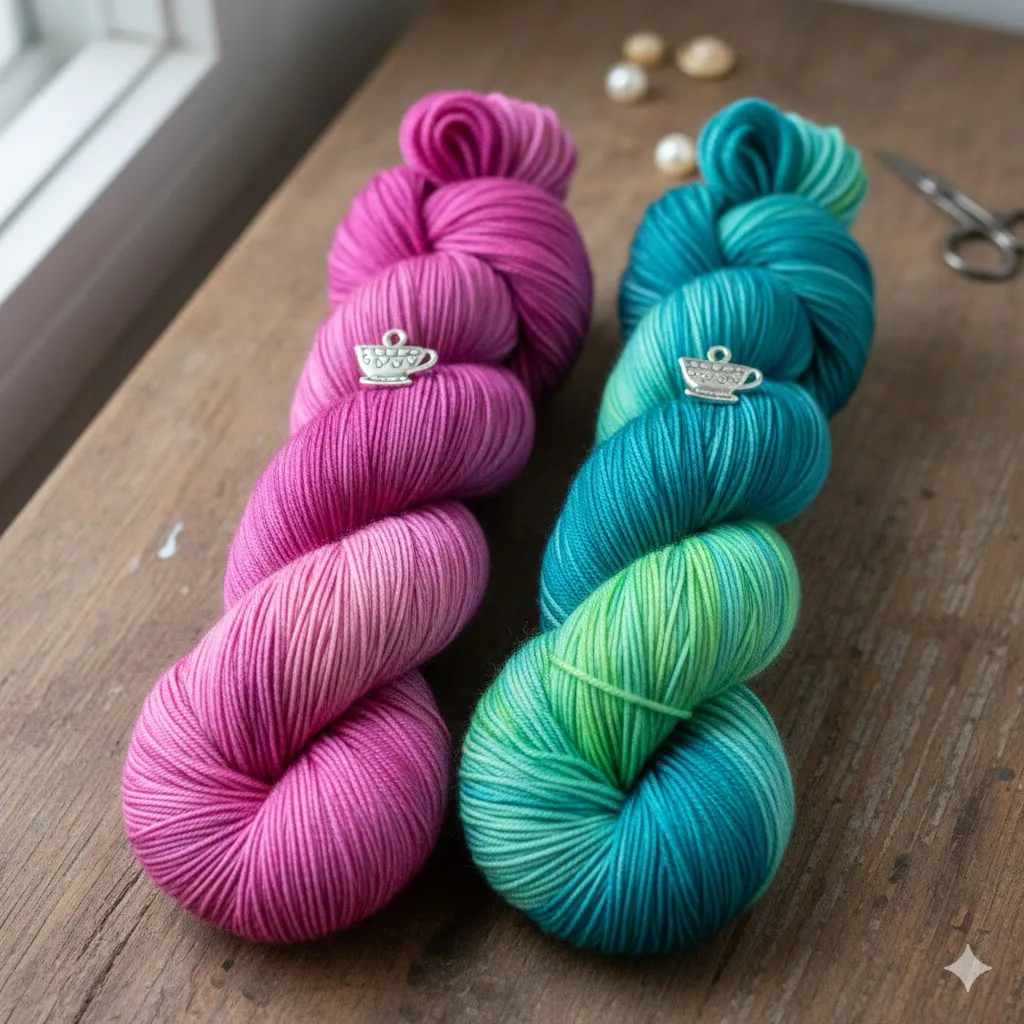
The Alice collection used fingering weight yarn, the thinnest in the Wonderland lineup. These skeins contained approximately 437 yards of 75% superwash merino wool and 25% nylon. This blend made Alice perfect for socks that needed durability in the heels and toes.
Fingering weight works beautifully for:
Alice colorways leaned toward self-striping designs. Colors transitioned every few yards, creating automatic stripes as you knit or crochet. Popular shades like “Down the Rabbit Hole” showed deep purples flowing into soft pinks, while “Tea Party” blended warm browns and cream.
Use US size 1-3 needles (2.25-3.25mm) or a B-1 to D-3 crochet hook. Gauge runs about 28-32 stitches per 4 inches. Projects take longer with fingering weight, but the fine fabric drapes beautifully.
Similar fingering weight options on Amazon include self-striping sock yarns with superwash merino blends.
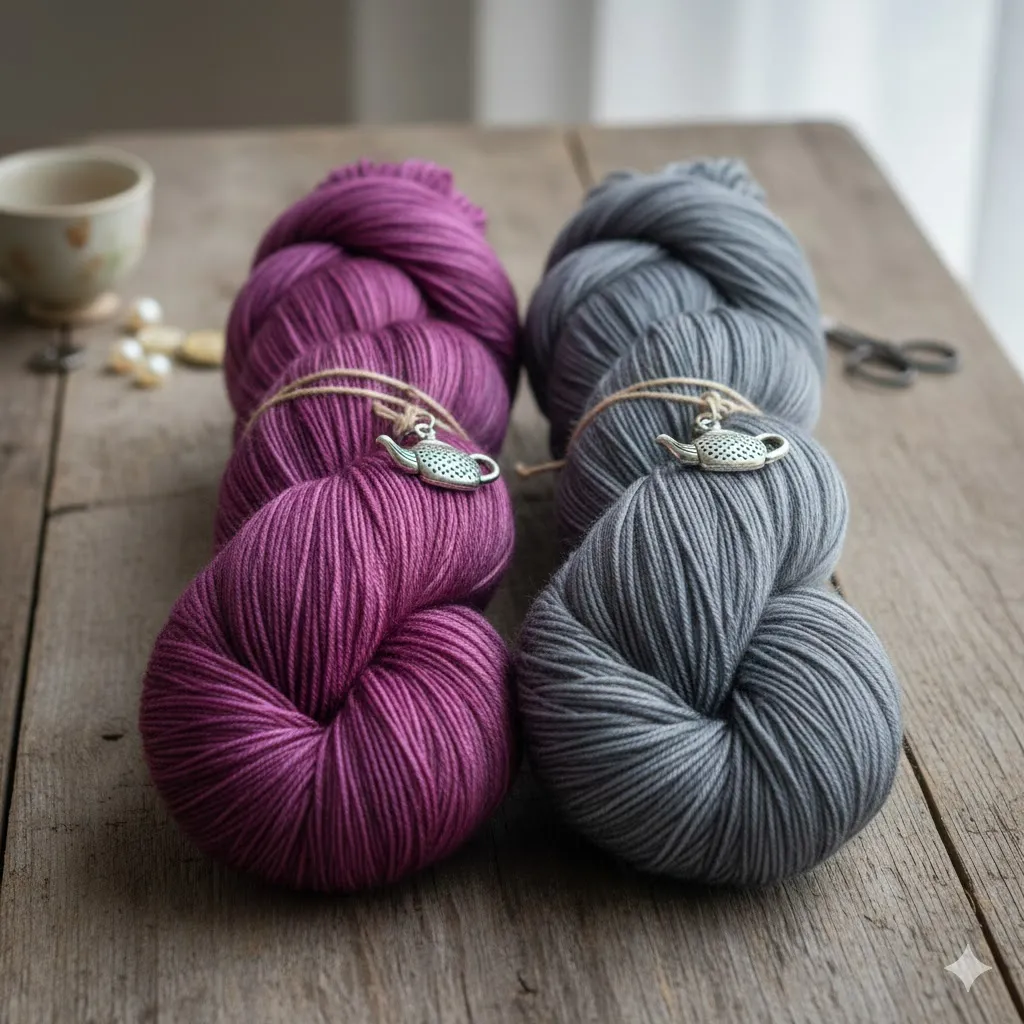
Cheshire Cat brought you DK (double knitting) weight yarn in tonal colorways. Each 246-yard skein contained 75% superwash merino wool and 25% nylon, matching Alice’s fiber content in a thicker strand.
DK weight sits between fingering and worsted, making it versatile for:
The “tonal” description meant colors stayed in the same family throughout the skein. You’d see depth and variation, but not dramatic color changes. “Cheshire Grin” showed varying shades of purple-pink, while “Invisible Cat” shifted through grays.
Work Cheshire Cat on US size 4-6 needles (3.5-4mm) or an E-4 to G-6 crochet hook. Expect 22-24 stitches per 4 inches. This weight knits faster than fingering but still produces refined fabric.
Find similar DK weight tonal yarns on Amazon with the same soft merino blend.
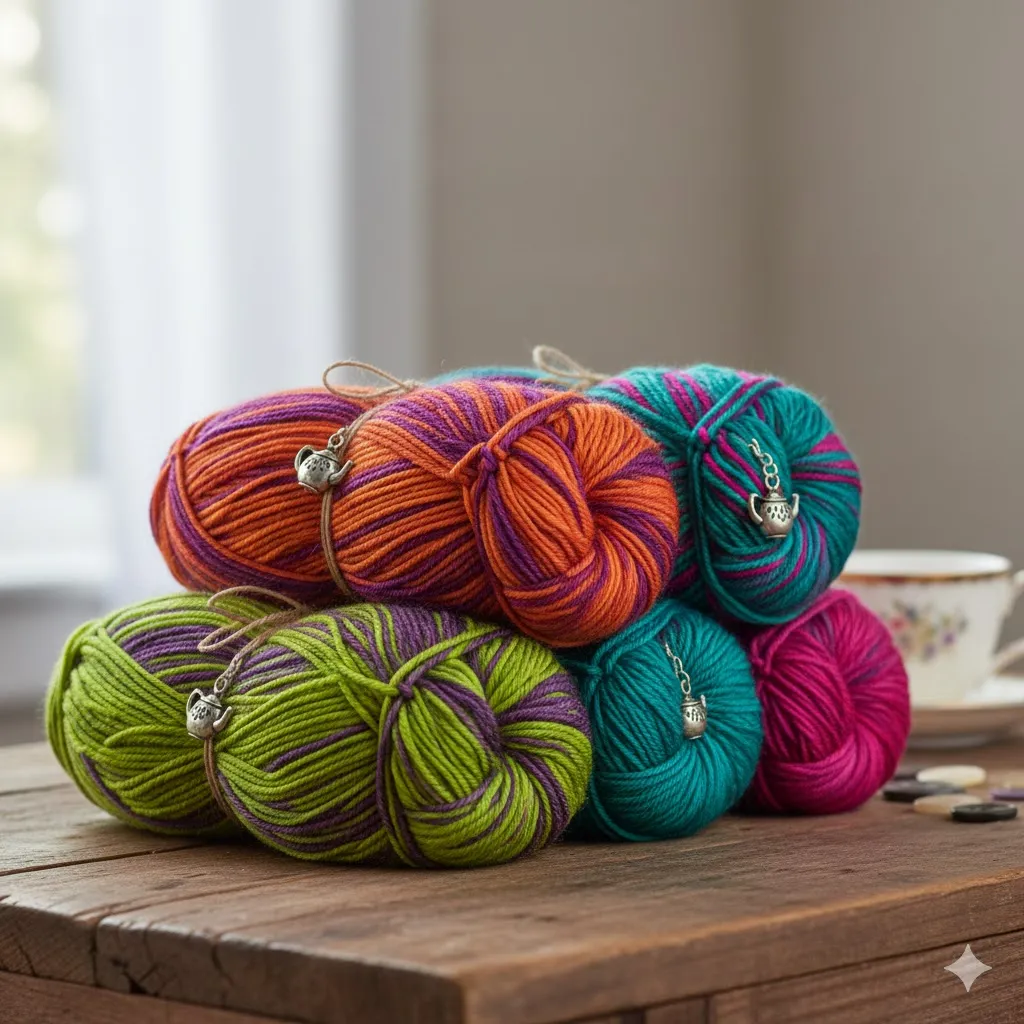
Mad Hatter offered worsted weight yarn with bold, variegated colors. These 218-yard skeins featured 80% superwash merino wool and 20% nylon. The slightly different blend ratio affected nothing practical—the yarn still washed easily and wore well.
Worsted weight serves as the “standard” yarn weight. Most patterns use it, and it works for nearly everything:
Mad Hatter’s variegated colorways showed the most dramatic color changes in the Wonderland lineup. “Mad as a Hatter” swung from bright orange to deep purple. “Riddle” blended teal, purple, and pink. These multi-color skeins created visual interest even in simple stitch patterns.
Use US size 7-9 needles (4.5-5.5mm) or an H-8 to I-9 crochet hook. Gauge typically runs 18-20 stitches per 4 inches. Projects work up quickly—a simple scarf takes just a few evenings.
Amazon has excellent worsted weight variegated options that recreate the Wonderland look.
The Queen of Hearts collection featured special luxury fiber blends that changed by release. Past versions included cashmere blends, silk blends, and mohair mixes. These limited-edition skeins cost slightly more ($12-15 regular price) but offered ultra-soft luxury.
Availability was always spotty with Queen of Hearts. Joann released small batches that sold quickly. These colorways rarely restocked.
Weights and fiber contents varied, so checking the label was essential. Some Queen releases used DK weight silk blends perfect for shawls. Others featured worsted weight cashmere mixes ideal for cowls worn close to the skin.
For luxury fiber blends, Amazon offers silk, cashmere, and mohair options from various quality brands.
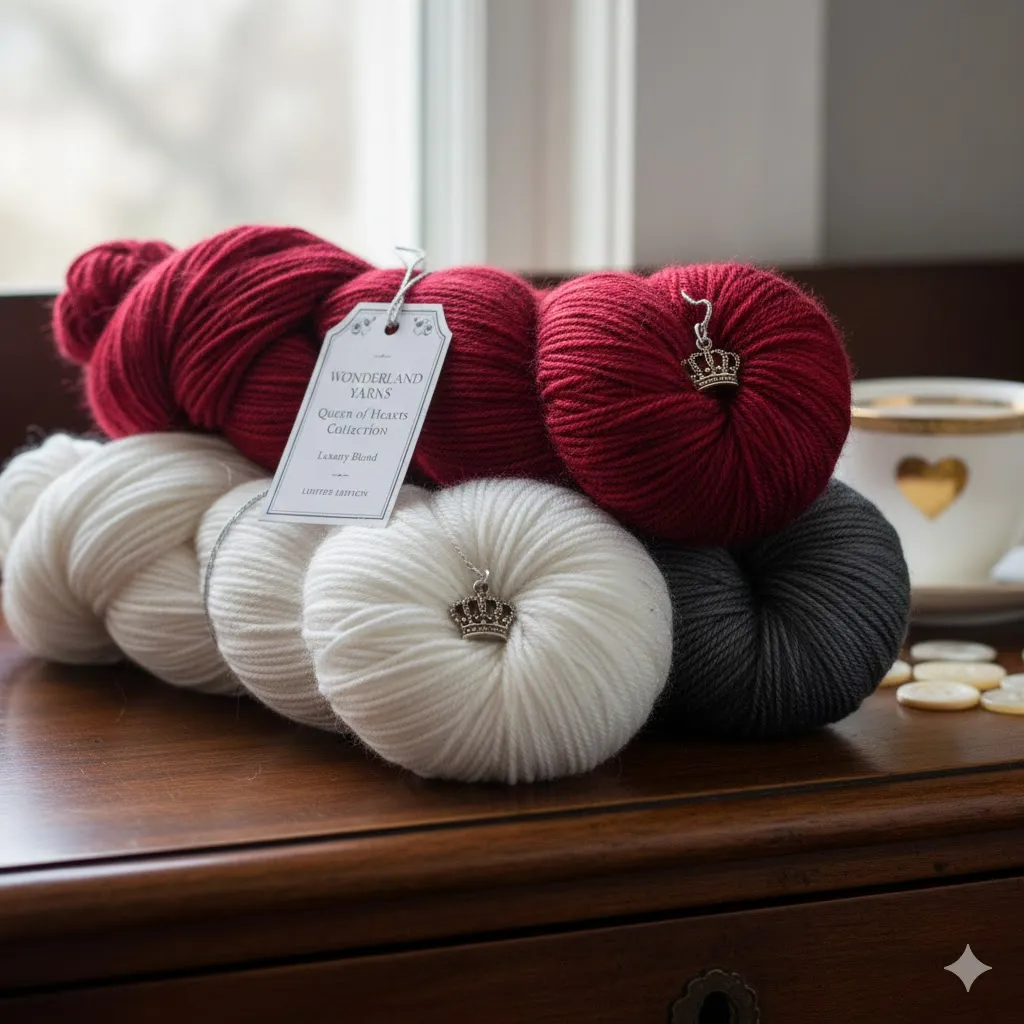
Wonderland Yarns released new colors seasonally, retiring older shades as new ones arrived. At any time, you could find 30-40 active colorways across all collections. Popular shades stuck around, while experimental colors came and went.
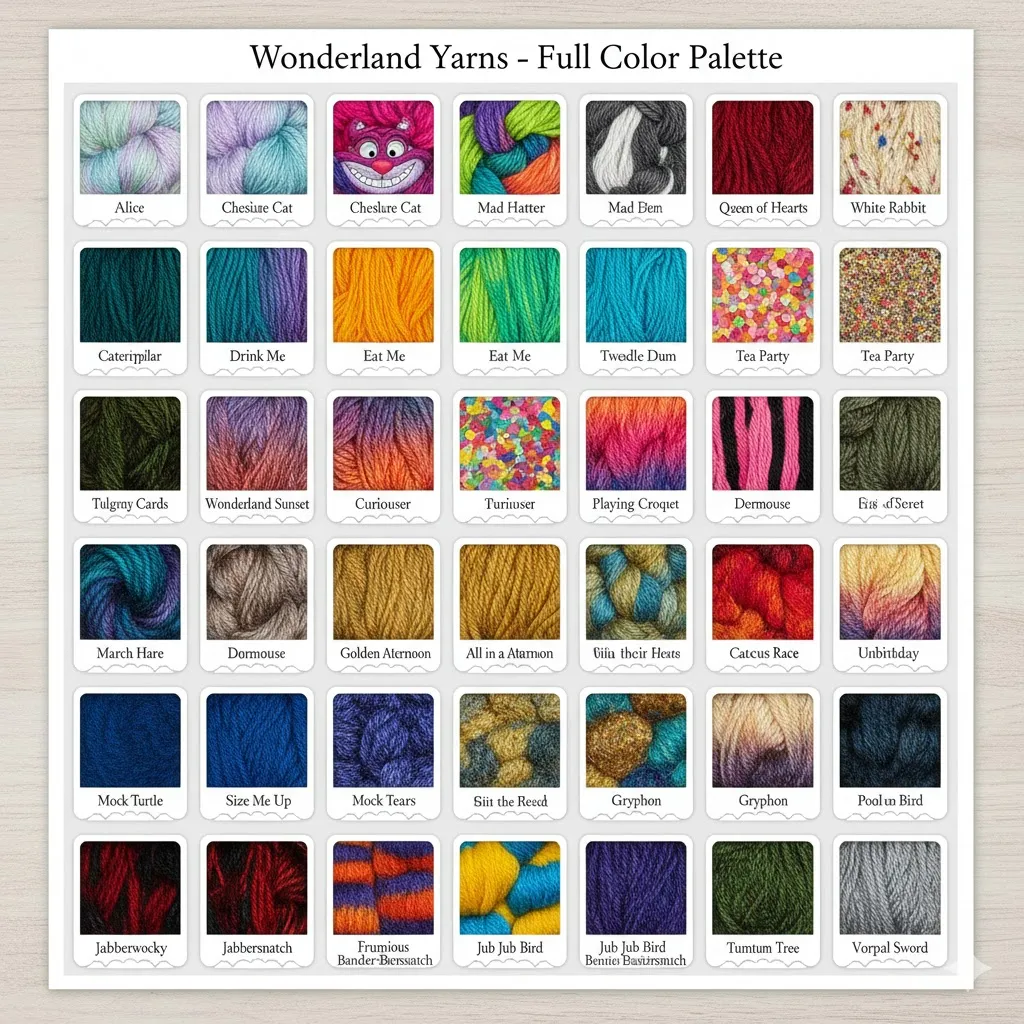
Certain Wonderland colors sold out faster than others. These popular shades got restocked more frequently:
Alice Collection Favorites:
Cheshire Cat Favorites:
Mad Hatter Favorites:
Wonderland discontinued many colorways since 2019. Crafters hunt these down on resale sites like Mercari or in destash groups. Some sought-after retired shades include:
If you find a discontinued color you love on resale sites, buy extra. These won’t return, and resale prices climb to $15-20 per skein.
Joann dropped seasonal Wonderland colors around major holidays. Spring brought pastels, fall featured rich jewel tones, and winter showcased deep, cozy shades. Summer releases leaned toward bright, cheerful colors.
Limited releases sold fast and rarely returned.
All Wonderland color names referenced the Alice stories. This theming helped you remember which shades appealed to you. Love whimsical pastels? Look for names like “Tea Party” or “Wonder.” Prefer bold, dramatic colors? Try “Queen of Hearts” or “Off with Their Heads.”
The naming also made gift-giving fun. Knitting for a friend who loves Alice in Wonderland? Choose colors that match her favorite characters or scenes.
Deciding between yarn brands gets overwhelming. Here’s when Wonderland-style yarns make the most sense for your project.
Wonderland-style yarns excel when color takes center stage. The rich, complex colorways do the design work for you. Simple patterns like basic stockinette or single crochet look impressive because the yarn provides visual interest.
Save these yarns for projects where you’ll see the color shifts:
Skip variegated yarns for heavily textured patterns. Complicated cable work or intricate lace hides color changes. Save money by using solid-colored yarn for those projects
Independent hand-dyers create stunning yarn, but they come with challenges:
Price: Indie yarn costs $25-35 per skein. Wonderland-style yarns cost $10-15 per skein on Amazon.
Consistency: Hand-dyed batches vary wildly. One skein might differ noticeably from another, even in the same colorway. Commercial hand-dyed-style yarns maintain consistency.
Availability: Indie dyers often work alone or in small teams. Popular colors sell out in minutes during updates and don’t restock for months. Amazon restocks regularly.
Customer Service: Buying from small businesses means limited return policies and longer response times. Amazon offers easy returns and exchanges.
Choose Wonderland-style yarn when you need reliable color matching across multiple skeins, can’t afford indie prices, or want the security of shopping with Amazon’s customer protection.
True hand-dyed yarn still beats commercial alternatives in some areas:
Uniqueness: No two indie-dyed skeins match exactly. Your project becomes one-of-a-kind.
Fiber Options: Indie dyers experiment with exotic blends like yak, qiviut, or bamboo silk. Commercial yarns stick to standard merino-nylon blends.
Supporting Small Business: Your money goes directly to artists and small-business owners, not a large corporation.
Color Depth: Expert hand-dyers achieve color saturations and transitions that commercial dyeing can’t match.
If budget allows and you want truly special yarn for a once-in-a-lifetime project, indie yarn justifies the cost. For everyday luxury at accessible prices, commercial hand-dyed-style yarns fit the bill.
Wonderland-style yarns work for many projects, but certain makes showcase these colorways perfectly.
Triangular shawls display gradient color shifts beautifully. As you knit from the center point outward, you’ll see colors gradually change across the entire width. The increasing row length means each color section gets larger as the shawl grows.
Popular shawl patterns for gradient yarns:
One skein of fingering or DK weight makes a small shawlette. Most full-size shawls need 2-3 skeins. Choose colors from the same family for subtle blending, or pick contrasting shades for bold statements.
Worsted weight’s bolder variegation creates more dramatic shawls. The color pops work well in stockinette, which keeps the fabric smooth and lets colors shine.
Fingering weight with nylon content creates durable socks that survive many wearings and washings. Self-striping colorways produce automatic patterns similar to caron cake yarn where you just knit in stockinette and watch stripes appear.
A typical adult sock uses 400-450 yards, meaning one fingering weight skein makes one pair. Buy two skeins from the same dye lot if you want matching socks. Some knitters deliberately use different colorways for fun, mismatched pairs.
The superwash treatment means you can throw finished socks in the washing machine. They’ll come out soft and maintain their colors. Regular merino requires hand-washing, but superwash handles machine cycles on gentle.
Beginner sock knitters love self-striping yarn because it forgives tension issues. Color changes hide slight variations in stitch size that would show in solid colors.
DK and worsted weights both work for sweaters. DK weight creates lighter sweaters perfect for layering or spring wear. Worsted weight produces standard-warmth sweaters for fall and winter.
Choose patterns with minimal texture. Stockinette cardigans, basic pullovers, and simple raglan constructions let colors show. Avoid heavy cables or complex colorwork—these fight with the variegation.
Buying enough yarn for sweaters requires planning. Check your pattern’s yardage requirements carefully. Adult sweaters typically need:
Critical tip: Buy all skeins from the same dye lot. Even small dye lot differences show in large projects like sweaters. Amazon sellers typically indicate dye lot information in product listings.
Quick, satisfying projects work perfectly in hand-dyed-style yarns. A simple cowl uses 200-400 yards (1-2 skeins) and knits up in a weekend. The small size means you can splurge on colors you love without huge investment.
Chunky cowls especially those made with Bernat Blanket yarn benefit from held-double techniques. Use two strands of fingering or DK weight together for super-bulky fabric that works fast. This approach shows off two complementary colors simultaneously.
Infinity scarves (long cowls you wrap multiple times) take 400-600 yards. The extra length displays color transitions beautifully as the scarf drapes around your neck.
With Joann’s closure, Wonderland Yarns is no longer available through its original retailer. While you might find some remaining inventory through:
The most reliable option for similar yarns is now Amazon, where you can find:
Amazon provides consistent availability, reliable shipping, easy returns, and the ability to reorder matching yarn if you need more for your project.
These superwash merino blends behave differently than acrylic or cotton yarns. Understanding their characteristics prevents frustration and helps you get professional results especially when paired with the right craft tools and accessories
Always, always knit a gauge swatch before starting projects. Superwash treatment makes the yarn stretchy and drapey. Your gauge will likely differ from non-superwash yarn at the same weight.
Make your swatch at least 6×6 inches. Wash it the same way you’ll wash the finished project (machine or hand), then dry it flat. Superwash yarn grows and relaxes significantly after its first wash. Your pre-wash measurements mean nothing.
Measure gauge on the dried, blocked swatch. If you’re off by even half a stitch per inch on a sweater, the final garment could be several inches too large or small.
Many knitters find they need to go down a needle size with superwash merino compared to regular merino. The superwash processing makes fibers slippery, creating looser fabric than expected. Test different needle sizes in your swatch.
Variegated yarn sometimes “pools”—colors stack on top of each other creating unintended blotches instead of pretty gradients. Quality hand-dyed-style yarns generally resist pooling due to long color repeats, but it can happen.
Preventing pooling:
If pooling happens, don’t panic. Sometimes ripping back a few rows and restarting shifts the pattern just enough to fix it. Other times, you need to switch to a different stitch pattern entirely.
When pooling looks good: Planned pooling creates intentional patterns. Some knitters work hard to make colors pool into argyle or plaid designs. If your “pooling problem” looks interesting, consider keeping it.
Simple stitches showcase colors best:
Use these:
Avoid these:
If you love complex patterns, save them for solid-colored yarn where the texture becomes the feature. Let variegated yarn be the visual interest through color alone.
Superwash merino tolerates machine washing, but that doesn’t mean you should wash carelessly. Follow these rules to keep projects looking new:
Washing:
Drying:
Storage:
How did Wonderland compare to other popular hand-dyed-style yarns? Here’s the honest breakdown.
Plot twist: Frabjous Fibers created Wonderland Yarns for Joann. The company still sells premium hand-dyed yarns under the Frabjous name at higher prices.
Wonderland Yarns (formerly Joann exclusive):
Frabjous Fibers (Direct from dyer):
If you loved Wonderland and want to “upgrade,” check out Frabjous Fibers’ website. You’ll get the same company’s aesthetic with true hand-dyed quality. But expect to pay triple the price.
Experienced crafters share these insider strategies for getting the most from hand-dyed-style yarns.
Never buy partial amounts planning to “get more later.” Dye lots sell out. Even if the same color restocks, different dye lots won’t match perfectly. This matters most in large projects like sweaters where color differences show.
Calculate your project yardage, add 10% for safety, and buy all skeins at once from the same dye lot. When ordering from Amazon, check if the seller can confirm dye lot matching for multiple skeins.
Even within the same dye lot, slight variations occur. Minimize visible differences by alternating skeins every two rows in large projects like blankets or sweaters.
Work two rows from skein A, two rows from skein B, two rows from skein A, continuing this pattern. The alternating blends any small color differences invisibly across the fabric.
This technique requires managing two working yarns simultaneously, but it prevents obvious color breaks where you switched skeins.
Thinking about using multiple colorways together? Buy one skein of each color first. Knit small swatches and place them side by side. Colors that look great separately might clash together.
Good combinations typically fall into two categories:
Avoid high-contrast combinations unless going for bold statements. Hot pink next to lime green creates visual shock that might not wear well long-term.
Superwash merino doesn’t attract moths like regular wool, but it still needs proper storage:
Short-term (current projects):
Long-term (stash storage):
Take photos of your yarn stash and keep them on your phone. When shopping for new colors, you’ll know what you already own and avoid buying duplicates.
Even great yarn comes with occasional challenges. Here’s how to solve common problems with superwash merino blends.
Some knitters find superwash yarns split more easily than other brands. The superwash treatment makes individual plies slippery, so needles catch them separately instead of going through the whole strand.
Solutions:
If splitting persists, the issue might be tension. Holding yarn too tightly causes plies to separate. Relax your grip slightly.
Occasionally, deep colors (especially reds and purples) bleed slightly during the first wash. This usually happens only once excess dye washes out, then the yarn becomes colorfast.
Prevention:
If bleeding stains your project, try color remover products designed for fabric. Test on a small section first. Sometimes rewashing with color catchers removes dye transfer
Machine-wound skeins sometimes contain knots where breaks occurred during production. Quality control usually catches these, but occasionally knots slip through.
Finding a knot mid-project frustrates everyone. Here’s how to handle it:
If you find multiple knots in one skein, contact the Amazon seller. One knot is normal, but several indicates poor quality control.
Hand-dyed-style yarns often come in hanks (twisted loops), not center-pull balls. You must wind them before knitting. Sometimes hanks tangle during winding, causing bird’s nests.
Winding tips:
Consider buying a ball winder and swift. The $40-50 investment pays off quickly if you regularly use hanked yarn. Many local yarn stores wind skeins free for customers—call and ask if they’ll wind purchased yarn for a small fee.
Rarely, skeins contain less yardage than labeled. This becomes obvious only when you run out of yarn before finishing.
Prevention:
If you suspect short yardage, weigh the skein and calculate. Fingering weight skeins should weigh about 100g, DK about 100g, worsted about 100g. Significant differences (15+ grams light) justify contacting the seller.
Amazon’s return policy protects you if you receive defective products. Document the issue with photos and contact customer service.
Cotton Fabric JOANN: Types, Quilting Cotton & Buying Guide (2026) Cotton fabric was one of the most important materials sold

Wool Yarn at JOANN: Types, Brands, Uses and Buying Guide (2026) Wool yarn is the original knitting and crochet fiber

Crochet Thread at JOANN: Sizes, Types, Uses and Buying Guide (2026) Crochet thread is not yarn. It is thinner, tighter,
Wonderland Yarns was exclusive to Joann Fabric stores but with Joann’s closure, this yarn is no longer reliably available. Your best option is to find similar superwash merino yarns on Amazon, where you’ll get consistent availability, easy reordering, and reliable customer service.
No, Wonderland Yarns used commercial dyeing techniques that created a hand-dyed appearance with more consistency. True hand-dyeing happens in small batches by individual dyers, creating unique variations between skeins. Wonderland’s commercial process produced matching skeins while maintaining the beautiful color variations that make hand-dyed yarn special.
Wonderland offered three main weights: Alice (fingering weight, 437 yards), Cheshire Cat (DK weight, 246 yards), and Mad Hatter (worsted weight, 218 yards). The limited Queen of Hearts collection featured special luxury blends in varying weights. Each weight used slightly different fiber blends, but all contained superwash merino wool with nylon for durability.
With Joann’s closure, Wonderland Yarns is no longer available through its original retail channel. While some inventory may appear on resale sites or in liquidation sales, the yarn line is effectively discontinued as a regularly available product. Amazon offers excellent alternatives with similar quality and colorways.