
Tulle Fabric at JOANN: Complete Types, Uses & Buying Guide (2026)
Tulle Fabric at JOANN: Complete Types, Uses & Buying Guide (2026) Tulle is a fine netting fabric with a hexagonal
 Skip to content
Velvet fabric is a soft, plush textile made with a cut pile that gives it that rich, light-catching surface. It works for clothing, upholstery, curtains, and craft projects. JOANN Fabrics, a national craft retailer, carried velvet fabric by the yard in the home decor and apparel departments, stocking crushed velvet, stretch velvet, polyester velvet, and upholstery grade velvet in colors like black, red, navy, pink, blue, green, and burgundy across the fabrics department.
After JOANN store closures, searches for velvet fabric joann sale and velvet upholstery fabric joann moved online. This guide covers every velvet type, how to choose the right one, sewing tips, care instructions, pricing, and where to buy velvet fabric today.
Velvet is a cut-pile fabric woven on a special loom that creates two layers at once, then cuts them apart to produce the raised pile surface. That pile the short upright fibers is what creates the soft texture and sheen velvet is known for. Velvet is not one fiber type. It is a construction method applied to silk, cotton, polyester, rayon, or spandex blends. As a velvet textile and velvet material it has been used for centuries across clothing, furniture, and home decor.
Two things define how velvet looks and performs pile height and nap direction. Pile height determines how plush the velvet material feels. Nap direction is the way the pile faces. When light hits velvet from different angles it looks lighter or darker, which is why velvet is a directional fabric and all pattern pieces must be cut with nap facing the same way for cutting layout alignment.
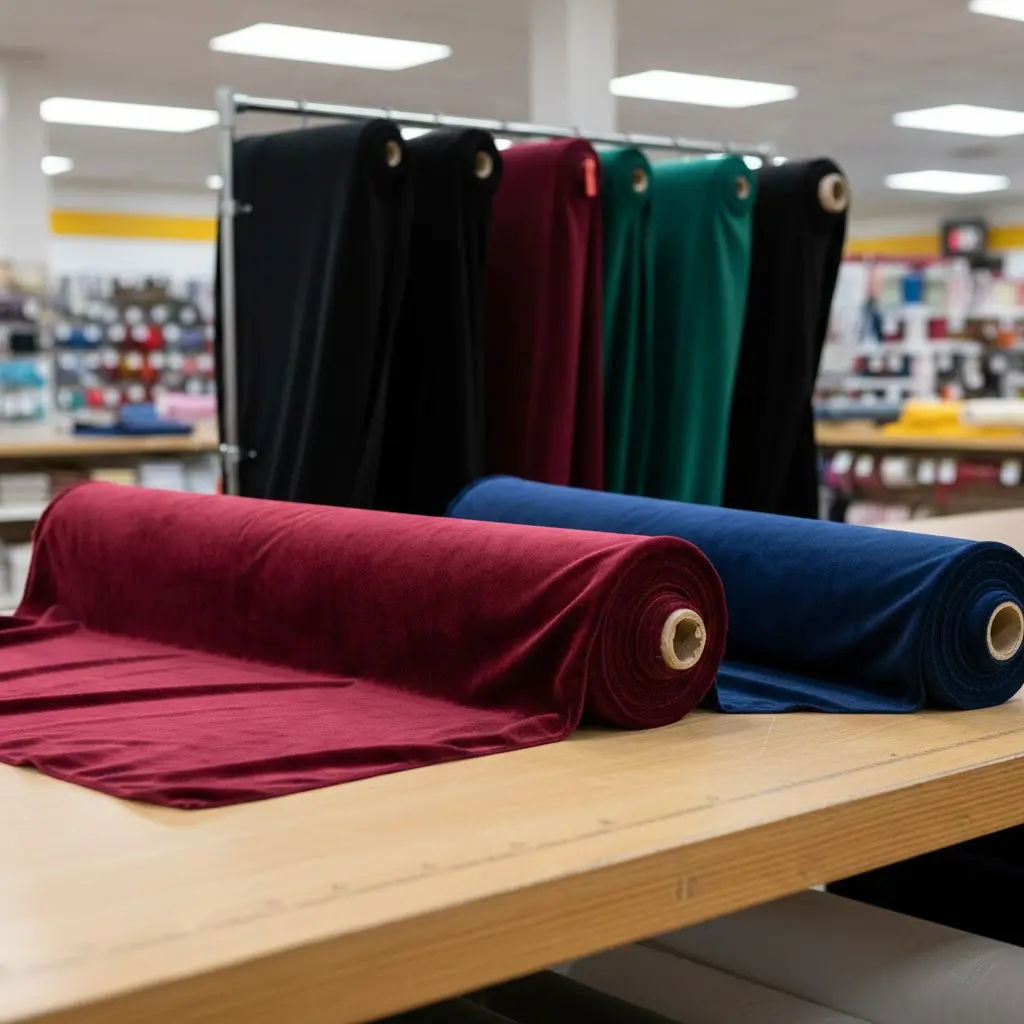
Most velvet is made using a warp pile velvet construction where extra warp yarns form the pile. Warp pile velvet is the most common velvet weave used in both apparel and upholstery fabric. Weft pile velvet exists but is far less common.
Pile density affects how durable the velvet is. A higher pile density means more fibers per square inch, which improves abrasion resistance and reduces pile flattening over time. Short pile velvet is stronger and better suited for upholstery. Long pile velvet feels softer but crushes more easily under pressure.
Fabric hand refers to how the velvet feels when held. A soft hand feels smooth and fluid. A firm hand feels structured and heavier. Upholstery grade velvet always has a firmer hand than apparel velvet because of its higher GSM and denser pile construction.
Most velvet bolts at JOANN were 54 to 60 inches wide. The velvet selvedge on the edge of the bolt lists fiber content, width, and care instructions. Upholstery velvet typically runs 400 to 600 GSM while apparel velvet runs 150 to 300 GSM.

Most velvet is made using a warp pile velvet construction where extra warp yarns form the pile. Warp pile velvet is the most common velvet weave used in both apparel and upholstery fabric. Weft pile velvet exists but is far less common.
Pile density affects how durable the velvet is. A higher pile density means more fibers per square inch, which improves abrasion resistance and reduces pile flattening over time. Short pile velvet is stronger and better suited for upholstery. Long pile velvet feels softer but crushes more easily under pressure.
Fabric hand refers to how the velvet feels when held. A soft hand feels smooth and fluid. A firm hand feels structured and heavier. Upholstery grade velvet always has a firmer hand than apparel velvet because of its higher GSM and denser pile construction.
Most velvet bolts at JOANN were 54 to 60 inches wide. The velvet selvedge on the edge of the bolt lists fiber content, width, and care instructions. Upholstery velvet typically runs 400 to 600 GSM while apparel velvet runs 150 to 300 GSM.
Velvet crosses clothing, furniture, and home decor categories equally well, which made it one of the most searched fabric types at joann fabrics stores.
Common uses include:
| Type | Fiber Base | Pile Style | Best Use |
|---|---|---|---|
| Crushed velvet | Polyester or rayon | Random crush pattern | Decor, costumes |
| Panne velvet | Polyester or rayon | Pressed flat one direction | Dancewear, formal |
| Silk velvet | Silk | Short dense pile | Luxury apparel |
| Cotton velvet | Cotton | Short structured pile | Upholstery, apparel |
| Polyester velvet | Polyester | Short or medium pile | All-purpose |
| Stretch velvet | Polyester spandex blend | Medium pile with stretch | Fitted clothing |
| Velveteen | Cotton | Very short matte pile | Quilting, kids wear |
| Rayon velvet | Rayon | Soft medium pile | Drapes, apparel |
| Upholstery velvet | Cotton or polyester | Dense short pile | Furniture, headboards |

Crushed velvet is made by twisting or pressing the fabric so the pile falls in multiple directions permanently. This creates a shimmery, dimensional surface. JOANN carried crushed velvet fabric by the yard in the apparel section, popular for costumes, dancewear, and holiday decor.
Panne velvet has the pile pressed completely flat in one direction using heat and pressure. The result is a mirror-like, highly reflective surface. It is lighter and more fluid than standard velvet, making it popular for dancewear and theatrical costumes.
Silk velvet is the original real velvet made with silk pile on a silk or rayon base. It has the deepest color and the most fluid drape of any velvet type. It requires dry cleaning and very careful handling during sewing.
Cotton velvet has a firm, structured pile that holds its shape better than synthetic velvet and shares characteristics with other cotton fabric types.. It is more breathable than polyester velvet and works well for upholstery and structured garments. Cotton velvet also builds less static than polyester versions.
Polyester velvet is the most widely available and affordable velvet type and falls under the broader category of polyester fabric used for apparel and decor. Most modern velvet sold at craft stores including JOANN was polyester velvet, also called faux velvet or fake velvet fabric. Real velvet historically referred to silk velvet. Polyester velvet is more durable, colorfast, and affordable than silk velvet, which is expensive because of fiber cost and slower production methods.
Black velvet fabric joann, red velvet fabric joann, blue, green, and pink velvet fabric joann all referred primarily to polyester velvet options in store.
Stretch velvet is a knit-backed velvet with spandex added for two or four-way stretch. It is the correct velvet for fitted clothing, leggings, bodysuits, and dancewear. Stretch velvet fabric joann was stocked in the stretch fabric section alongside other performance knits.
Velveteen is not true velvet. It is a cotton fabric with a very short matte pile woven using a plain or twill weave. It is stiffer and less shiny than velvet. Velveteen fabric joann was popular for children’s clothing, quilting accents, and beginner craft projects.
Rayon velvet drapes more softly and holds color more deeply than polyester velvet. It is less durable and needs careful handling. Best used for drapes, decorative pillows, and apparel where drape matters more than durability.
Upholstery velvet is heavier and denser than apparel velvet and is rated for abrasion resistance measured in Wyzenbeek double rubs similar to other upholstery fabric options.. Velvet upholstery fabric joann was sold in the home decor department of this national craft retailer alongside other furniture fabrics. For residential furniture choose a minimum 15,000 double rubs. For commercial seating choose 30,000 or higher.
Plush velvet fabric has a longer, thicker pile than standard velvet giving it an even softer surface. It is heavier than regular polyester velvet and popular for throw pillows, holiday decor, and cozy apparel where maximum softness matters more than structure.
Velvet and velour look similar but are completely different constructions. Velvet is woven using a cut pile construction. Velour is knit, which means it stretches naturally without spandex added.
Velour has a softer, more casual feel used for tracksuits and loungewear. Velvet has a denser, more upright pile with a formal appearance used for upholstery, drapery, and structured garments. If you are searching velour material and landing on velvet results, these are related but not interchangeable.
JOANN stocked velvet fabric in a wide color range across the home decor and apparel departments with seasonal displays rotating throughout the year.
Core colors always in stock included black velvet fabric joann, navy velvet, burgundy velvet, and ivory velvet for formal and bridal projects. Blue velvet fabric joann, red velvet fabric joann, and green velvet fabric joann were consistent sellers across costume and decor. Pink velvet fabric joann and purple velvet fabric joann peaked during holiday and costume seasons. Brown velvet rounded out the neutral range for upholstery and home decor projects.
Fall drove the heaviest velvet color demand with deep jewel tones like emerald, sapphire, and wine displayed prominently from August through December. Bridal demand pushed ivory, blush, and champagne velvet year round for winter wedding fabric projects

Running your hand with the nap feels smooth and silky. Running against it feels slightly resistant and visibly changes the color tone. Polyester velvet feels smooth and slightly cool. Cotton velvet feels warmer and more textured. Silk velvet is the softest, lighter and more fluid than any synthetic version. Plush velvet fabric feels the most cushioned of all types with its longer pile depth.
Crushed velvet feels softer than structured velvet because the pile is already laid flat. Panne velvet feels the smoothest of all types. Upholstery velvet feels the firmest, dense and structured with good pile recovery after pressure.
For furniture including sofa reupholstery, accent chairs, and headboards, choose upholstery grade velvet rated at minimum 15,000 Wyzenbeek double rubs. Apparel velvet will flatten and wear through fast under daily seating pressure regardless of how it looks on the bolt.
For clothing, structured blazers and formal wear need woven polyester or cotton velvet. Fitted dresses and dancewear need stretch velvet or spandex velvet. Bridal velvet and costume velvet work best in rayon velvet or high-quality polyester velvet for drape and color depth.
For curtains choose velvet with enough weight to hang properly. Rayon velvet and polyester velvet both drape well. For craft projects and table runners, crushed velvet and panne velvet are the most forgiving because the random pile direction hides handling marks naturally.
Upholstery grade velvet is tested for abrasion resistance. Wyzenbeek double rub testing measures how many times fabric can be rubbed back and forth before wear appears. Martindale testing measures similar durability using a circular motion. Higher numbers on both tests mean stronger, longer-lasting fabric.
Apparel velvet does not go through abrasion testing which is why it cannot be used for furniture. Higher pile density also improves durability and slows down pile flattening in high-use areas.
| Metric | Residential | Commercial |
|---|---|---|
| Wyzenbeek double rubs | 15,000 plus | 30,000 plus |
| Martindale cycles | 20,000 plus | 40,000 plus |
| Pile recovery | Medium | High |
| Colorfastness | Good | Very Good |
Standard velvet is not waterproof. Traditional velvet fabric is not suitable for outdoor use unless it has been specially treated. Outdoor velvet is a specialty upholstery product and is not the same as standard velvet fabric by the yard. For fully weatherproof fabric projects see the outdoor fabric guide.
For machine recommendations that handle thick upholstery velvet well, see the joann sewing machines guide explore local sewing classes for hands-on instruction
Ignoring nap direction when cutting is the most expensive velvet mistake. Panels cut in opposite directions look like different shades of the same color when assembled. Lay every pattern piece on the fabric before cutting and confirm all nap arrows point the same way.
Using a standard presser foot crushes the pile along every seam in the finished project. A walking foot or roller foot spreads pressure evenly across the pile surface. For velvet upholstery a Teflon foot also works well because it glides over the pile without gripping.
Buying apparel velvet for furniture is a mistake that costs time and money. Apparel velvet and upholstery velvet look identical on the bolt but only upholstery velvet has an abrasion rating. Without that rating the fabric will flatten permanently under regular seating in months not years.
| Velvet Type | Price per Yard | Difficulty |
|---|---|---|
| Polyester velvet | $6 to $12 | Easy |
| Crushed velvet | $5 to $10 | Easy |
| Panne velvet | $6 to $12 | Easy |
| Stretch velvet | $8 to $15 | Medium |
| Cotton velvet | $10 to $18 | Medium |
| Rayon velvet | $12 to $20 | Hard |
| Upholstery velvet | $15 to $30 | Medium |
| Silk velvet | $30 to $80 | Advanced |
JOANN velvet fabric sale events happened at end of summer and again during October and November holiday season, regularly discounting velvet 30 to 50 percent. The remnant bin at JOANN was one of the best sources for velvet at reduced prices, perfect for small costume and craft projects. Weekly JOANN coupons of 40 to 50 percent off brought premium velvet into budget range regularly. The same velvet is now available online at comparable prices with customer reviews showing real pile quality before you buy.

| Fabric | Texture | Durability | Drape | Best Use |
|---|---|---|---|---|
| Velvet | Plush pile | Medium to High | Rich, heavy | Upholstery, formal wear |
| Chenille | Textured loops | Medium | Soft, casual | Throws, casual upholstery |
| Satin | Smooth sheen | Low to Medium | Fluid, light | Formal wear, lining |
| Cotton fabric | Flat weave | Medium | Structured | Everyday apparel |
| Polyester fabric | Smooth | High | Variable | All-purpose |
| Upholstery fabric | Woven | Very High | Structured | Furniture |
Velvet sits between chenille and satin in texture depth. Unlike outdoor fabric or heavy canvas, velvet prioritizes surface beauty alongside function which is why it crosses apparel and furniture categories equally well.
For more fabric types and materials, explore the full fabrics collection including upholstery fabric, cotton fabric, and polyester fabric guides
Velvet was one of JOANN’s strongest seasonal fabric categories with demand peaking every fall and holiday season for costume velvet, velvet curtains, and velvet home decor. JOANN stocked velvet on large bolts in the home decor department for upholstery and curtain projects, and in the apparel department for clothing and costumes.
The fabric cutting counter handled heavy velvet volume every October through December. Remnant bins regularly featured velvet offcuts at reduced prices which made it accessible for small projects and first-time velvet sewists. National brands like Richloom appeared alongside JOANN private label velvet options. Weekly coupons of 40 to 50 percent off regularly applied to velvet and online yardage ordering with in-store pickup made larger upholstery projects easier to plan.
| Feature | JOANN Historical | Michaels | Hobby Lobby |
|---|---|---|---|
| Velvet selection | Very wide | Limited | Moderate |
| Upholstery velvet | Yes | Rarely | Occasionally |
| Crushed velvet | Yes | Limited | Yes |
| Stretch velvet | Yes | No | Rarely |
| Price point | Mid-range | Higher | Mid-range |
| Coupon culture | 40 to 50% weekly | Occasional | 40% weekly |
| Post-closure access | Amazon | In-store limited | In-store limited |
JOANN had the widest velvet selection of any major craft chain. Michaels carries some velvet following the JOANN acquisition but the depth does not match historical JOANN inventory. Hobby Lobby stocks basic polyester and crushed velvet but rarely carries upholstery grade or stretch velvet. Amazon now offers the widest current online selection with customer reviews to help assess pile quality before buying.
JOANN stocked velvet in two locations home decor for upholstery and curtain velvet, and apparel fabric for clothing and costume velvet. Colors like black, red, navy, burgundy, pink, blue, and green velvet fabric were always stocked with seasonal additions expanding the range every fall. Sample swatches at the fabric cutting counter let customers check pile quality and color before buying full yardage.
Many customers searched joann fabrics near me specifically to find which stores had particular velvet colors in stock for upholstery projects. After store closures, velvet fabric joann and joann velvet fabric searches moved primarily to Amazon and online fabric retailers. You can find former store locations on the joann fabrics near me page.
All JOANN stores closed permanently by May 30, 2025 following the second bankruptcy filing in January 2025. Velvet fabric is no longer available at physical JOANN locations. The same velvet types JOANN carried are available through Amazon, Michaels, and Hobby Lobby today.
Amazon carries the largest online selection of velvet fabric by the yard including polyester velvet, crushed velvet, stretch velvet, upholstery velvet, panne velvet, and cotton velvet in hundreds of colors. Customer reviews help assess real pile quality and color accuracy before buying.

Steam is the best tool for velvet care. Hold a steamer above the pile without touching it and brush gently with a soft clothes brush to revive crushed pile after storage or use. To prevent pile flattening on upholstery, rotate cushions regularly and avoid heavy pressure concentrated in one spot.
Store velvet garments hanging not folded and store velvet fabric rolled on a tube not folded flat to protect the pile long term.
| Velvet Type | Washing | Drying | Pressing | Storage |
|---|---|---|---|---|
| Polyester velvet | Cool gentle machine wash | Air dry | Steam from back | Hang or roll |
| Cotton velvet | Hand wash or dry clean | Air dry flat | Steam from back | Hang |
| Silk velvet | Dry clean only | Air dry | Steam only | Hang in garment bag |
| Rayon velvet | Dry clean recommended | Air dry | Steam only | Hang |
| Stretch velvet | Cool gentle machine wash | Air dry | Steam from back | Fold carefully |
| Upholstery velvet | Spot clean only | Air dry | Steam from back | Leave on furniture |
| Crushed velvet | Cool gentle machine wash | Low heat | No pressing needed | Fold or hang |

Velvet is made from silk, cotton, polyester, rayon, or spandex blends the cut-pile construction defines it, not the fiber
Regular velvet has pile standing upright in one direction. Crushed velvet has pile permanently pressed in multiple directions creating a shimmery surface.
Yes, but only upholstery grade velvet rated at minimum 15,000 Wyzenbeek double rubs apparel velvet will wear through fast on furniture.
Yes. Traditional velvet is woven using warp pile construction where extra yarns form the pile surface.
Velvet is woven with a cut pile. Velour is knit and stretches naturally. Velvet is formal, velour is casual.
No. Standard velvet is not waterproof and is not designed for outdoor use unless specially treated.
Pile is the short upright fibers on the surface. Nap is which direction they face. All pieces must be cut with nap pointing the same way or finished panels look mismatched.
Light reflects differently off the pile depending on which direction you view it. This is the nap effect and is normal in all velvet fabric.
Use a universal needle 70/10 or 80/12 for apparel velvet and 90/14 for upholstery velvet.
Upholstery grade velvet is tested for abrasion resistance at minimum 15,000 Wyzenbeek double rubs and is denser and heavier than apparel velvet.
Use a walking foot or roller foot and sew with the pile facing down against the feed dogs.
Panne velvet has its pile pressed flat in one direction creating a mirror-like surface, popular for dancewear and formal costumes.
Tulle Fabric at JOANN: Complete Types, Uses & Buying Guide (2026) Tulle is a fine netting fabric with a hexagonal

Velvet Fabric at JOANN: Complete Types, Uses and Buying Guide (2026) Velvet fabric is a soft, plush textile made with
Iron-On Letters: Complete Guide to Heat Transfer Vinyl Application Iron-on letters transform plain clothing and fabric items into personalized creations