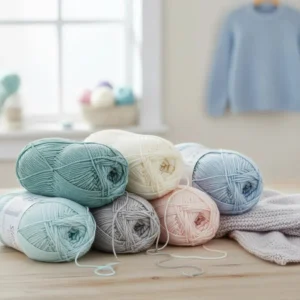
Caron Simply Soft Yarn: Complete Guide for Knitting & Crochet
Caron Simply Soft Yarn: Complete Guide for Knitting & Crochet Caron Simply Soft Yarn is one of the most popular
 Skip to content
Worsted yarn is the most popular yarn weight in the world and it was the single biggest seller in the joann yarn department for one simple reason: it works for everything. Blankets, hats, sweaters, scarves, amigurumi, baby items, and beginner projects all use worsted weight yarn as the default starting point. If you have ever picked up a skein of yarn without thinking too hard about it, there is a very good chance it was worsted weight.
JOANN Fabrics stocked worsted yarn across the joann yarn aisle in every fiber, color, and brand. That included house brands Big Twist and Caron alongside national brands Red Heart, Lion Brand, Bernat, and Patons as part of the complete joann fabrics crafting ecosystem. After store closures in 2025, searches for worsted yarn joann and worsted weight yarn joann moved online. This guide covers what worsted yarn is, how it fits into the weight system, what projects use it, what brands JOANN carried, and where to buy worsted yarn now.
Worsted yarn is a medium weight yarn that falls at number 4 on the standard yarn weight system. It is called worsted weight because of its connection to the worsted spinning method a technique that produces smooth, tightly twisted yarn by combing fibers parallel before spinning. This creates a yarn with a clean, defined structure that holds stitch shapes clearly and works easily on standard hook and needle sizes.
Worsted weight yarn is also called medium weight yarn or category 4 yarn. These all mean the same thing. The number 4 label is what appears on the yarn band inside a small skein symbol. When a pattern says weight 4 or medium weight yarn, it means worsted.
Most people start with worsted yarn without even realizing it has a name. It is the standard yarn thickness found in every craft store, shown in every beginner tutorial, and used in the majority of free crochet and knitting patterns online.

This is one of the most searched questions about worsted yarn and the answer surprises most people.
The difference between woolen and worsted yarn is not about fiber. It is about how the yarn is spun. Worsted yarn is made by combing fibers so they all point in the same direction before spinning. This produces a smooth, dense, strong yarn with clear stitch definition. Woolen yarn is made by carding fibers in random directions before spinning. This produces a loftier, fluffier, softer yarn with a halo effect.
Both worsted and woolen spun yarns can be made from wool, acrylic, cotton, or any other fiber. The spinning method is what separates them not the material.
Most yarn sold at JOANN including nearly all acrylic, cotton, and wool blend worsted weight yarns used a worsted spinning method. This is why stitch definition is clear and consistent across standard JOANN yarn brands.
Worsted yarn has a distinctive look that is easy to identify once you know what to look for.
It is a medium thickness yarn noticeably thicker than sock yarn or DK weight, and noticeably thinner than bulky or chunky yarn. A standard worsted weight skein has a balanced, smooth surface with a visible twist structure. The stitches it creates are clearly defined and easy to see which is why beginners find it much easier to learn on than thicker or thinner weights.
A worsted weight knitting needle or crochet hook is typically 4.5mm to 5.5mm. If you are holding a hook in that range and the yarn fills it comfortably without stretching or bunching, you are most likely working with worsted weight yarn.
The best visual test is the yarn label. Look for the number 4 inside the skein symbol on the band. If the label says medium, weight 4, or worsted weight it is worsted yarn.
Category 4 yarn is the official Craft Yarn Council classification for worsted weight yarn. The Craft Yarn Council assigns every commercially sold yarn a number from 0 to 7 based on thickness and gauge. Category 4 sits in the middle of the scale heavier than lace, fingering, sport, and DK, but lighter than bulky and super bulky.
The category 4 label is universally used across all major yarn brands. Whether you are buying Big Twist, Red Heart, Caron, or Lion Brand, the number 4 on the label means the same thickness and the same recommended hook or needle range.
Every commercially sold yarn carries the same universal label system developed by the Craft Yarn Council. Once you know what to look for, identifying worsted weight yarn takes about three seconds.
The skein symbol Look for a small skein icon on the front of the yarn band. Inside it is a number from 0 to 7. Worsted weight always shows the number 4 inside that symbol.
The word “Medium” Many yarn bands print the word Medium directly on the label alongside the number 4. Both mean the same thing.
Recommended hook and needle size The label will list a recommended crochet hook size between 4.5mm and 5.5mm and a knitting needle size in the same range. If the hook or needle recommendation falls in this range, the yarn is worsted weight.
Gauge information Worsted weight yarn labels typically show a gauge of 14 to 20 stitches per 4 inches in stockinette knitting. If the gauge is in this range, it confirms worsted weight.
Yardage per skein Standard worsted weight skeins typically run 180 to 426 yards. Very short skeins under 100 yards are usually a heavier weight. Very long skeins over 500 yards at a low price point are usually a thinner weight.
The Craft Yarn Council established these yarn weight standards as a universal system so every crafter regardless of brand or country can identify yarn weight from the label alone. All major JOANN brands followed this standard, making Big Twist, Red Heart, Caron, and Bernat worsted weight yarns directly comparable on any worsted weight pattern.
Understanding where worsted weight sits in the full system helps you choose the right yarn for any project.
| Weight | Number | Gauge per 4 inches | Hook Size | Needle Size | Common Projects |
|---|---|---|---|---|---|
| Lace weight | 0 | 32+ stitches | 1.5 to 2.25mm | 1.5 to 2.25mm | Fine lace, thread work |
| Fingering weight | 1 | 28 to 32 stitches | 2.25 to 3.5mm | 2.25 to 3.5mm | Socks, fine garments |
| Sport weight | 2 | 23 to 26 stitches | 3.5 to 4.5mm | 3.5 to 4.5mm | Baby items, light garments |
| DK weight | 3 | 21 to 24 stitches | 4.0 to 4.5mm | 4.0 to 4.5mm | Light sweaters, accessories |
| Worsted weight | 4 | 16 to 20 stitches | 4.5 to 5.5mm | 4.5 to 5.5mm | Blankets, hats, sweaters |
| Bulky | 5 | 12 to 15 stitches | 5.5 to 8mm | 5.5 to 8mm | Chunky scarves, thick hats |
| Super bulky | 6 | 7 to 11 stitches | 8 to 15mm | 8 to 15mm | Fast blankets, arm knitting |
| Jumbo | 7 | 6 or fewer stitches | 15mm+ | 15mm+ | Extreme arm knitting |
Worsted weight sits at number 4 directly in the center of the weight system. Most JOANN yarn aisle shelf space was dedicated to worsted weight because it dominates yarn sales across every fiber and project category.

Knowing how worsted compares to nearby weights helps you substitute confidently and understand why patterns specify the weight they do.
DK weight is one step lighter than worsted thinner, with more stitches per inch and a finer finished fabric. DK yarn produces lighter garments with better drape. Worsted produces a thicker, warmer fabric that works up faster on larger hooks and needles. If a pattern calls for worsted and you use DK, the finished item will be smaller and lighter than intended. DK weight is popular for summer sweaters and baby items where a lighter, drapey fabric is preferable.
Bulky yarn is one step heavier than worsted thicker, faster to work, and producing a chunkier finished fabric. Bulky yarn is the go-to for fast blankets, thick scarves, and oversized hats. Worsted is better for fitted garments and projects where stitch definition matters. Substituting bulky for worsted in a fitted pattern produces a finished item that is noticeably larger, looser, and different in structure from what the pattern intended.
Sport weight is two steps lighter than worsted. It produces a finer, lighter fabric used primarily for baby items, light athletic garments, and accessories where a lightweight fabric is needed. Sport weight uses much smaller hooks and needles typically 3.5 to 4.5mm compared to worsted’s 4.5 to 5.5mm.
Fingering weight is four steps lighter than worsted. It is a very fine yarn used almost exclusively for socks, lace shawls, and delicate fine-gauge projects. Fingering weight uses hooks and needles as small as 2.25mm. Most beginners should avoid fingering weight until they are comfortable with worsted and have consistent tension habits.
Aran weight sits between worsted and bulky slightly thicker than worsted but noticeably thinner than bulky. Aran is the traditional weight for Irish sweater patterns and cable knitting. Some patterns marked as aran and worsted overlap in gauge range. Always check the gauge specification rather than relying on the name alone.
Knowing how much yarn to buy before you start prevents the most common project problem running out mid-project with a different dye lot available.
| Project | Yardage Needed | Notes |
|---|---|---|
| Scarf basic | 200 to 350 yards | Longer or wider scarves need more |
| Hat adult | 120 to 180 yards | One standard skein usually sufficient |
| Hat child | 80 to 120 yards | Often under one skein |
| Baby blanket | 400 to 800 yards | Varies by size and stitch pattern |
| Lap blanket | 800 to 1,200 yards | Standard small throw |
| Adult throw blanket | 1,200 to 2,000 yards | Most common blanket project |
| Adult sweater | 1,000 to 1,600 yards | Varies by size and stitch |
| Amigurumi small | 50 to 100 yards | Scraps often sufficient |
| Market bag | 200 to 300 yards | Depends on stitch pattern |
| Dishcloth | 60 to 100 yards | Typically under one small skein |
Always buy 10 to 15 percent more than the estimated yardage and keep all skeins from the same dye lot. A standard adult throw blanket using Caron One Pound at 812 yards per skein requires two to three skeins making the large yardage skein format far more cost-effective than buying multiple smaller skeins.
For worsted yarn joann under $5, coupon-stacked Big Twist Value skeins regularly dropped below $2 per skein but at only 180 yards each, a large blanket could require 10 or more skeins. Always calculate total project yardage before buying to avoid multiple store trips.
Sometimes the exact worsted yarn a pattern calls for is discontinued, out of stock, or outside your budget. Substituting yarn correctly means the finished project matches the original design in size and feel.
Substituting within worsted weight is the easiest substitution. Any worsted weight 4 yarn can substitute for another worsted weight 4 yarn from a different brand but always make a gauge swatch first. Even two yarns labeled worsted weight 4 can produce different gauges because fiber type and twist level affect how tightly stitches sit.
Substituting worsted for aran weight is possible with gauge adjustment. Aran is slightly thicker than worsted using aran where the pattern calls for worsted produces a slightly larger, thicker finished piece. Adjust by going down one needle or hook size and swatching to match gauge before committing.
Substituting worsted for DK weight produces a lighter, smaller finished piece. DK is one step thinner going up one hook or needle size from the pattern recommendation and swatching to match gauge is required. The finished fabric will have a slightly different drape and weight than a true worsted substitute.
The most important rule for any yarn substitution is to match gauge, not just weight label. Always make a gauge swatch with the substitute yarn using the pattern’s recommended hook or needle size. Measure the swatch after washing it to account for how the fiber behaves after the first wash cycle.
Worsted weight describes the thickness of yarn not the material. Every fiber type is available in worsted weight, and the fiber choice significantly changes how the finished project looks, feels, and is cared for.
Acrylic worsted yarn is the most widely sold worsted weight in every major craft store including JOANN. It is affordable, machine washable, available in hundreds of colors, and works for almost every project type. It is the correct choice for beginners, large blanket projects, and any item that will be washed frequently. Big Twist Value, Red Heart Super Saver, and Caron One Pound were the top acrylic worsted sellers in the JOANN yarn department. For a complete breakdown of acrylic worsted yarn brands and project uses see the acrylic yarn joann guide.
Cotton worsted yarn is the standard fiber for dishcloths, washcloths, market bags, and summer garments. Cotton has no stretch it holds its shape rigidly and produces crisp stitch definition. It is heavier when wet than acrylic and requires more consistent tension during knitting and crochet. JOANN carried Big Twist Cotton and K+C Essential Cotton as house brand cotton worsted options. For a full breakdown of cotton worsted behavior and substitutes see the cotton yarn joann guide.
Wool worsted yarn is the traditional weight for handknit sweaters, hats, and cold weather accessories. It is warmer than acrylic, more elastic than cotton, and produces excellent stitch definition for colorwork and cable patterns. Patons Classic Wool and Lion Brand Fishermen’s Wool were the primary wool worsted options at JOANN. For a full breakdown of wool worsted types and care requirements see the wool yarn joann guide.
Merino wool worsted is the premium version of wool worsted softer, finer, and suitable for projects worn directly against skin. It is significantly more expensive than standard wool worsted but produces garments with a luxurious feel that standard acrylic cannot match. Most merino worsted was not carried at JOANN in significant quantity serious merino buyers used specialty yarn shops or online retailers.
Superwash wool worsted is machine washable wool the most practical wool weight for everyday knitters who want wool performance without hand washing. It is the best starting point for crafters moving from acrylic to natural fiber for the first time.
Wool blend worsted mixes wool with acrylic, nylon, or alpaca to balance performance and affordability. Wool acrylic blend worsted is warmer than pure acrylic but more affordable than pure wool. Alpaca blend worsted adds softness and warmth above standard wool. Wool nylon blend worsted is the standard sock yarn construction the nylon adds durability for high-wear areas.
Worsted weight covers more project categories than any other weight. This is exactly why it dominates yarn sales worldwide and why JOANN dedicated the most yarn aisle space to it.
Blankets are the highest-volume worsted weight project. Worsted produces a warm, substantial blanket fabric that works up at a reasonable pace. It is heavy enough to feel cozy but light enough to not become exhausting to work with on a large project. Large yardage skeins like Caron One Pound at 812 yards per skein were specifically popular with blanket makers in the JOANN yarn department.
Worsted weight is the standard hat weight. It produces warm, structured beanies that hold their shape and fit well. Most free beginner hat patterns are written for worsted weight because the hook and needle sizes are large enough to see stitches clearly and work efficiently.
Worsted yarn for sweaters produces a sturdy, warm garment with clear stitch definition. It works up faster than DK or sport weight and is an excellent intermediate knitting project. Wool or superwash wool worsted is the preferred choice for sweaters where garment quality and natural breathability matter.
Worsted is the easiest scarf weight for beginners large enough to work quickly, produces a substantial warm fabric, and shows beginner stitch patterns clearly. A basic scarf in worsted weight can be completed in a weekend.
Baby blankets in worsted weight use soft anti-pilling acrylic or superwash merino for machine washable infant items. Worsted weight baby blankets work up faster than DK or sport and produce a substantial warm fabric appropriate for infant use.
Worsted weight is the most popular amigurumi weight. The medium thickness creates a fabric dense enough to hold stuffing securely when worked at a tighter gauge. Most amigurumi patterns are written for worsted or similar weight with a hook size one to two sizes smaller than standard to close gaps in the fabric.
Worsted yarn crochet projects cover the full range from beginner to advanced. Common crochet projects include granny square blankets, textured stitch dishcloths, market bags, stuffed animals, winter accessories, and home decor items. Most free crochet patterns online are written for worsted weight because it is the most widely accessible yarn weight.
Worsted yarn knitting patterns range from simple scarves and dishcloths for beginners to full sweaters, colorwork projects, and structured garments for intermediate and advanced knitters. Standard worsted weight knitting uses 4.5mm to 5.5mm needles depending on fiber type and desired gauge.

If you are not sure what worsted weight looks like in real yarn products, here are specific examples.
Any of these look the same in terms of thickness and work on the same hook and needle sizes. The fiber content is what differs.
The right worsted yarn for your project depends on three things: fiber, project use, and budget. Follow this order every time.
Step 1 Choose fiber based on project use.
| Project Type | Best Worsted Fiber | Key Reason |
|---|---|---|
| Machine-washed blanket | Acrylic worsted | Washable, affordable, wide colors |
| Dishcloths or kitchen items | Cotton worsted | Absorbent, washable, holds shape |
| Winter sweater | Wool or superwash worsted | Warmth and natural breathability |
| Baby blanket | Soft acrylic or superwash merino | Washable, hypoallergenic |
| Beginner practice project | Budget acrylic worsted | Affordable mistakes, forgiving |
| Amigurumi toy | Standard acrylic worsted | Tight gauge, firm fabric |
| Gift item | Anti-pilling acrylic worsted | Survives washing, long-lasting |
Step 2 Choose weight 4 yarn matching your pattern number.
Every worsted weight yarn uses the number 4 label. Always match this number to your pattern’s required weight. Even if two yarns are both labeled worsted weight, fiber differences change gauge always make a gauge swatch.
Step 3 Choose brand based on yardage and budget.
Compare cost per yard, not price per skein. A $10 skein with 812 yards costs significantly less per yard than a $4 skein with 180 yards. For large blanket projects this difference is substantial.
Yarn gauge measurement tells you how many stitches fit in 4 inches of fabric. Worsted weight yarn produces 16 to 20 stitches per 4 inches in knitting using 4.5 to 5.5mm needles. In crochet, gauge varies more widely depending on stitch type and hook angle.
A knitting gauge swatch is a small test square you knit before starting a project to check that your tension matches the pattern’s gauge specification. A crochet gauge swatch serves the same purpose confirming your tension and hook size produce the correct stitch density before committing to the full project.
Skipping a gauge swatch on worsted weight garments is the most common cause of sweaters and fitted items that do not fit. Always swatch, then block the swatch, then measure because many fibers shift size after the first wash.
Understanding yarn structure helps you choose better and troubleshoot problems.
Yarn ply refers to how many individual strands are twisted together to form the final yarn. Most worsted weight yarn is 4-ply four strands twisted together. More plies create a rounder, more structured yarn. Single-ply worsted is softer but splits more easily during crochet.
Twist in yarn refers to how tightly the plies are wound together. High-twist worsted yarn produces crisp stitch definition and good stitch durability. Low-twist yarn is softer and has more drape but shows stitch definition less clearly.
Spun yarn is the base construction of all commercial yarn. Fibers are drafted and twisted into individual strands before being plied together. The twist direction S-twist or Z-twist affects how stitches sit on the needle and whether yarn untwists during working.
Skeins of yarn are the twisted loop format most yarn is sold in. A skein must be wound into a ball or cake before working to prevent tangling. Yarn balls and yarn cakes both work the difference is shape and how they feed during use.
Worsted yarn skein sizes vary significantly by brand. Standard worsted weight skeins run from 3.5 oz to 8.8 oz in weight. In yardage terms that spans from approximately 180 yards in a small skein up to 812 yards in a large one-pound skein. The skein weight in ounces or grams does not directly predict yardage a 3.5 oz acrylic skein has more yards than a 3.5 oz cotton skein because cotton is denser. Always compare yarns by yardage, not by skein weight.
Common skein sizes at JOANN by category:
Yarn dye lot is the production batch that determines exact color shade. Two skeins of the same color from different dye lots can look different in natural light even if they match under store lighting. Always buy enough skeins from the same dye lot to complete your project in one purchase.
Yes. Worsted weight is the best starting weight for almost every beginner.
It is thick enough to see your stitches clearly and correct errors before they compound across rows. It works on hook and needle sizes large enough to handle comfortably typically 5mm which makes tension management easier than with smaller tools. Beginner patterns are predominantly written for worsted weight because the finished project grows quickly enough to keep motivation high.
The most beginner-friendly worsted yarns are affordable acrylic options Big Twist Value, Red Heart Super Saver, or Caron Simply Soft. These are forgiving, machine washable, and inexpensive enough that learning mistakes cost almost nothing.
Worsted weight is the correct weight for:
Start with solid colors not variegated solid worsted yarn makes it much easier to see stitches, count rows, and identify errors while learning
Using the wrong weight number is the most common and most consequential mistake. A worsted 4 pattern requires worsted 4 yarn. Using bulky 5 or DK 3 produces finished dimensions that do not match the pattern regardless of how accurately you work the stitches.
Ignoring dye lots on large projects creates visible color banding. This is most obvious on large solid-color blankets where two skeins from different lots create a visible stripe at the join. Buy all skeins for one project in one shopping trip.
Choosing by price alone without checking yardage gives less yarn than expected. The cost per yard is the only fair comparison between worsted skeins of different brands. A $3 skein at 100 yards costs more per yard than an $8 skein at 400 yards.
Skipping gauge swatches on fitted garments is a worsted weight specific frustration. Different worsted brands have different tensions even at the same weight number. A swatch takes 20 minutes and prevents hours of reworking.
Using standard acrylic worsted for items washed frequently without anti-pilling formula produces pilled fabric after several wash cycles. For blankets, hats, and garments laundered regularly, anti-pilling worsted acrylic is worth the small extra cost.
JOANN stocked worsted weight yarn more heavily than any other weight in the joann yarn aisle. Multiple full shelving sections covered worsted weight across every fiber and brand.
Big Twist yarn was JOANN’s house brand covering the widest range of worsted weight options at the most affordable price point. Several Big Twist lines fall in the worsted weight category.
Big Twist Value Worsted Yarn was the most basic and affordable a standard worsted acrylic in dozens of solid colors. It was the default practice yarn and budget blanket yarn for high-volume crafters. Big Twist worsted acrylic yarn joann customers purchased most heavily during 40 to 50 percent off coupon weeks when the price dropped below $2 per skein.
Big Twist Twinkle Yarn was a worsted weight acrylic with a subtle sparkle fiber spun throughout the strand a popular choice for holiday projects, ornaments, and seasonal scarves where a bit of shimmer added festive appeal without switching to specialty novelty yarn.
Big Twist Party Yarn was a textured worsted weight with a fun, multi-texture construction popular for beginner projects and children’s items where color and texture variety was part of the appeal.
Big Twist Boho Yarn was a softer worsted weight with a relaxed twist and earthy colorways targeted at the modern aesthetic crochet and knitting community that grew strongly in the mid-2010s through social media.
For a complete breakdown of all Big Twist yarn lines, weights, and current substitutes see the big twist yarn guide.
Red Heart Super Saver is the best-selling worsted weight acrylic yarn in the United States. It is a tight-twist 4-ply worsted with excellent stitch definition, 364 yards per skein, and one of the widest color ranges of any standard worsted. It was heavily stocked in the JOANN yarn department as a national brand staple. Red Heart is known for durability it resists yarn splitting during crochet and holds up through years of washing better than most budget acrylics.
Caron One Pound is a worsted weight 100% acrylic in a massive 812-yard one-pound skein the highest single-skein yardage in the standard worsted category. It was the go-to yarn for large blanket projects and temperature blankets where hundreds of yards of consistent color are needed without dye lot concerns.
Caron Simply Soft is a softer worsted weight with a slight sheen and one of the least scratchy acrylic surfaces in the JOANN yarn range. It was the most popular worsted choice for garments, baby items, and skin-contact wearables where standard acrylic felt too rough.
Lion Brand Basic Stitch is a soft worsted weight acrylic with minimal scratchiness one of the most comfortable standard worsted options against skin. Lion Brand stocked several additional worsted weight lines at JOANN including wool blends and premium soft acrylics across the yarn department.
Bernat Super Value is an anti-pilling worsted weight acrylic with 426 yards per skein at a competitive mid-tier price. It was positioned as the step above budget house brand yarns better quality than Big Twist Value but below premium acrylic lines. The anti-pilling processing makes it significantly better for blankets and garments that will be washed frequently.
Patons Classic Wool is the most widely available worsted weight 100% wool in mass retail. It is a standard worsted weight natural wool not superwash with excellent stitch definition for colorwork and cable knitting. It was stocked at JOANN as the primary wool worsted option for experienced knitters who required natural fiber.

JOANN stocked worsted weight yarn in one of the widest color ranges of any craft retailer. The full color selection across brands covered every major color category.
Red worsted yarn joann Red Heart Super Saver and Big Twist Value both offered full red ranges from bright cherry to deep burgundy and cranberry. Red was a consistent best seller year-round with spikes during holiday project season.
Blue worsted yarn joann Navy, royal blue, light blue, and denim shades were among the highest-selling neutral colors across all worsted brands. Blue shades sold consistently for baby items, blankets, and winter accessories.
Black worsted yarn joann Black worsted was a permanent high-seller for home decor items, market bags, and fashion garments. Both Big Twist and Red Heart maintained black in permanent stock.
White worsted yarn joann White and cream worsted yarn joann customers bought heavily for baby blankets, wedding accessories, and seasonal holiday projects. Cream sold slightly more consistently than pure white across the yarn aisle.
Brown worsted yarn joann Brown shades including tan, caramel, chocolate, and espresso were popular for amigurumi animals, autumn accessories, and natural-aesthetic home decor items.
Color availability varied by brand. Big Twist Value offered the widest solid color range of any JOANN house brand. Red Heart Super Saver offers over 100 solid and variegated colorways and remains the widest color range available in standard worsted after JOANN store closures.
| Brand | Fiber | Yardage | Regular Price | Coupon Price | Cost Per Yard |
|---|---|---|---|---|---|
| Big Twist Value | Acrylic | 180 yards | $2 to $4 | $1 to $2 | $0.006 to $0.011 |
| Red Heart Super Saver | Acrylic | 364 yards | $5 to $8 | $2.50 to $4 | $0.007 to $0.011 |
| Caron Simply Soft | Acrylic | 315 yards | $6 to $9 | $3 to $4.50 | $0.010 to $0.014 |
| Caron One Pound | Acrylic | 812 yards | $10 to $14 | $5 to $7 | $0.006 to $0.009 |
| Bernat Super Value | Acrylic | 426 yards | $6 to $9 | $3 to $4.50 | $0.007 to $0.011 |
| Lion Brand Basic Stitch | Acrylic | 185 yards | $4 to $7 | $2 to $3.50 | $0.011 to $0.019 |
| Patons Classic Wool | Wool | 194 yards | $8 to $12 | $4 to $6 | $0.021 to $0.031 |
Worsted yarn joann under $5 searches specifically targeted the coupon-stacked pricing window where Big Twist Value and Red Heart dropped below $3 per skein on weekly sale. JOANN weekly coupon discounts of 40 to 50 percent off applied to all worsted yarn brands. Caron One Pound consistently delivered the best cost per yard in the worsted category especially when combined with coupon stacking on larger skein purchases.
Joann worsted yarn sale events in January, May, and October were the highest-traffic periods for stocking up on large blanket yarn quantities. The joann clearance yarn bins offered discontinued worsted colorways at 50 to 70 percent off regular pricing the best source for end-of-line skeins in matching dye lots.
Worsted weight was the single highest-volume yarn category in the joann yarn department not because it was fancy, but because it served every customer at once.
Beginners bought it because every tutorial and free pattern pointed them to worsted weight. Experienced crafters bought it for large blanket projects where affordability and yardage mattered more than fiber luxury. Gift makers bought it because machine washable acrylic worsted survives real-world use without special care. Charity knitting groups bought it by the pound for donation blankets.
JOANN organized the joann yarn aisle with worsted taking more physical shelf space than any other weight. House brands Big Twist and Caron sat at eye level. National brands Red Heart, Bernat, and Lion Brand filled adjacent shelving. Specialty worsted fibers cotton, wool, and blends occupied a smaller dedicated section alongside standard acrylic.
The joann weekly coupon system made worsted the most aggressively discounted yarn category with prices dropping below any competitor during sale weeks. Seasonal worsted displays promoted fall and winter project season with large feature displays of blanket and hat yarns at the front of the joann yarn section.
The joann craft store yarn section also used worsted weight displays as cross-category entry points beginner crafters who came in for their first project were almost universally pointed toward worsted weight as the correct starting point, making it a gateway category for the entire JOANN crafting ecosystem.
| Feature | JOANN Historical | Michaels | Hobby Lobby |
|---|---|---|---|
| House brand worsted | Big Twist, Caron | Loops and Threads | I Love This Yarn |
| National brands | Red Heart, Lion Brand, Bernat | Red Heart, Lion Brand | Lion Brand, Yarn Bee |
| Cotton worsted | Yes Big Twist, K+C | Limited | Yes I Love This Cotton |
| Wool worsted | Yes Patons, Lion Brand | Limited | Limited |
| Anti-pilling options | Yes Big Twist Living | Yes Loops and Threads | Yes I Love This Yarn |
| Color range | Very wide | Moderate | Moderate |
| Coupon discount | 40 to 50% weekly | 20% app coupon | 40% weekly |
| Yardage value | Highest with coupon stacking | Moderate | Moderate |
| Post-closure access | Amazon | In-store | In-store |
JOANN had the widest worsted weight selection of any major craft chain because house brands gave price flexibility that Michaels relying primarily on national brand pricing could not consistently match. Hobby Lobby’s I Love This Yarn is the strongest in-store worsted substitute for Big Twist Value in quality and price.
JOANN stocked worsted weight yarn as the dominant category in the joann yarn aisle from its earliest yarn department expansion through to store closures in 2025. Worsted weight occupied the most shelf footage of any yarn category multiple full sections covering every brand, fiber, and color in the worsted range.
Customers planning large blanket projects would wait for the joann yarn sale to buy 10 to 20 skeins in a single transaction filling entire shopping baskets with matching dye lot worsted weight acrylic at half price. The joann yarn department treated worsted weight as a year-round staple category rather than a seasonal product because its uses span every season.
JOANN yarn brands in the worsted category built their own loyal followings over years of consistent stocking. Big Twist Value acrylic worsted was on JOANN shelves long enough that it became the default budget yarn for an entire generation of American crafters. Searches for joann big twist value worsted yarn and big twist worsted acrylic yarn joann now primarily surface substitution discussions in crafting communities but the loyalty those products built is still visible in how consistently they are referenced in pattern discussions across Reddit, YouTube, and Ravelry.
Amazon carries the widest selection of worsted weight yarn by the skein including all national brands across every fiber and color. Free shipping thresholds make online worsted yarn joann alternatives cost-competitive with in-store pricing when buying multiple skeins.
Hobby Lobby carries I Love This Yarn as the strongest in-store worsted weight acrylic substitute for Big Twist Value. Michaels carries Loops and Threads and Red Heart Super Saver in-store. Walmart carries Red Heart Super Saver as a consistent in-store worsted option at competitive pricing.
Many customers searching worsted yarn near me previously relied on JOANN store locators to check yarn department stock before making the trip. With physical JOANN locations no longer operating, the same store locator searches now direct to Hobby Lobby, Michaels, and Walmart as the nearest in-store worsted weight options in most areas. Many customers who previously used joann fabrics near me to check yarn stock now buy direct through Amazon for the widest worsted weight selection across all fiber types. For the complete overview of all yarn types previously available see the full joann yarn category guide.

Care for finished worsted weight projects depends entirely on the fiber content. Always follow the yarn label for the specific product used.
| Fiber | Washing | Drying | Notes |
|---|---|---|---|
| Acrylic worsted | Machine wash cool or warm | Tumble dry low | Avoid high heat acrylic melts |
| Cotton worsted | Machine wash warm or cool | Tumble dry low or air dry | May shrink slightly on first wash |
| Wool worsted non superwash | Hand wash cool only | Lay flat to dry | Agitation causes felting |
| Superwash wool worsted | Machine wash cool gentle | Lay flat or tumble dry low | Still avoid high heat |
| Wool acrylic blend worsted | Machine wash cool | Tumble dry low | Blend determines care |
Store unused worsted weight skeins away from direct sunlight to prevent color fading. Keep natural fiber yarns wool and cotton in sealed bags or bins with cedar blocks to prevent moth and pest damage. Acrylic worsted is the most storage-resilient fiber and requires no special storage beyond keeping skeins dry and dust-free.
Worsted yarn is a medium weight yarn classified as weight 4 on the standard yarn weight scale. It is the most widely sold yarn weight worldwide because it works for almost every project type from blankets to garments to accessories.
Category 4 yarn is the official Craft Yarn Council classification for worsted weight yarn. The number 4 appears on the yarn label inside a small skein icon. It indicates medium weight yarn with a gauge of 16 to 20 stitches per 4 inches.
Worsted yarn has a medium thickness with a smooth, balanced twist structure. It is noticeably thicker than sock or DK yarn and noticeably thinner than bulky yarn. Standard worsted weight yarn fits on a 4.5mm to 5.5mm hook or needle.
These are not the same thing. Worsted is a yarn weight classification. Acrylic is a fiber type. Acrylic worsted yarn is acrylic fiber in worsted weight. You can also have cotton worsted, wool worsted, or any other fiber in worsted weight. The weight and the fiber are separate characteristics.
Blankets, hats, scarves, sweaters, amigurumi toys, baby blankets, dishcloths, market bags, and winter accessories. Worsted weight covers more project categories than any other yarn weight.
Yes. Worsted weight is the best starting yarn weight for beginners. It is thick enough to see stitches clearly, works on comfortable hook and needle sizes, and most free patterns are written for worsted weight
Woolen and worsted refer to spinning methods, not fiber types. Worsted spun yarn combs fibers parallel before spinning producing a smooth, dense, defined yarn. Woolen spun yarn cards fibers randomly producing a loftier, fluffier yarn. Both can be made from any fiber.
Worsted weight yarn uses 4.5mm to 5.5mm crochet hooks or knitting needles as the standard range. Most worsted patterns specify 5mm as the baseline hook or needle size.
A standard adult throw blanket in worsted weight requires approximately 1,000 to 1,800 yards depending on stitch pattern and finished size. Baby blankets require approximately 400 to 800 yards. Always add 10 to 15 percent extra for finishing and weaving in ends.
Caron Simply Soft Yarn: Complete Guide for Knitting & Crochet Caron Simply Soft Yarn is one of the most popular

Poplin Fabric at JOANN: Complete Types, Uses & Buying Guide (2026) Poplin is a tightly woven cotton fabric with a
Cotton Fabric JOANN: Types, Quilting Cotton & Buying Guide (2026) Cotton fabric was one of the most important materials sold