Ultimate Guide to JOANN Christmas Decorations & Crafts 2026: Where to Shop After Store Closures
Ultimate Guide to JOANN Christmas Decorations & Crafts 2026: Where to Shop After Store Closures JOANN Fabrics was America’s favorite
 Skip to content
Sewing thread is the one supply every single sewing project requires no thread, no stitch. Choosing the wrong thread type causes broken stitches, puckered seams, and snapped thread mid-project. The right thread makes every stitch clean, strong, and invisible in the finished work.
JOANN Fabrics stocked sewing thread across the joann notions aisle in a dedicated thread section. That included Gutermann, Coats and Clark, Singer, and DMC across cotton thread, polyester thread, quilting thread, metallic thread, and specialty types. After store closures in 2025, searches for sewing thread joann and joann sewing thread moved online. This guide covers every thread type, thread size chart, brand breakdown, color options, and where to buy sewing thread now.
Sewing thread is a thin strand of fiber twisted tightly to carry through a needle eye and form stitches in fabric. It connects two pieces of fabric together by interlocking the top thread with the bobbin thread inside the fabric layers.
Every sewing machine uses two threads at once. The top thread feeds from a spool on the thread spool pin, which holds the spool upright and feeds thread into the machine’s path. It travels through the thread guide, down through the thread take-up lever, and into the needle eye. The bobbin thread feeds from below the needle plate. Both threads lock together at each stitch to form the seam.
Thread tension controls how tightly these two threads interlock. Upper thread tension is adjusted using the thread tension dial on the machine. Bobbin tension is preset at the factory for most home machines. When both tensions are balanced, stitches sit evenly between both fabric layers.
Thread quality affects stitch quality directly. Low-quality thread has inconsistent thickness, weak twist, and lint-heavy construction that clogs machine tension discs. Premium thread runs smoothly, breaks less, and leaves finished seams cleaner.

Sewing thread is used for every stitched construction task garment assembly, quilting, embroidery, topstitching, hemming, and repair work.
The right thread type depends on the fabric and the stitch function. Construction seams need strong durable thread. Decorative topstitching needs heavier thread with good color visibility. Quilting needs fine, low-loft thread that does not add bulk to quilt layers. Embroidery needs shiny thread that catches light and shows detail clearly.
Sewing thread joann fabrics customers purchased across every use case from basic polyester for garment construction to specialty metallic and elastic thread for craft and costume projects.
Not all sewing thread is the same. Thread material changes strength, stretch, heat tolerance, and finish. Using the wrong thread type for the fabric causes seam failure, tension problems, and finished work that looks wrong.
Cotton thread is a natural fiber thread made from spun cotton. It has low stretch, high heat tolerance, and a matte surface that blends into fabric naturally. Cotton thread is the correct choice for cotton quilting, cotton garments, and any natural fiber project where thread stretch would distort the seam. Cotton thread works best when sewing natural fabrics see the cotton fabric joann guide for full fabric weight and project guidance.
Cotton sewing thread joann customers purchased most heavily for quilting projects. Cotton thread does not stretch, which keeps quilt seams flat and stable over time. Customers frequently searched thread joann fabrics when specifically looking for cotton thread in Gutermann or Coats and Clark stock. Standard cotton thread runs in weights from fine hand quilting thread to heavier machine quilting thread.
Polyester thread is a synthetic fiber thread with slight stretch, high strength, and excellent color retention. It is the most versatile thread type and the highest-volume seller in any craft store thread section.
Polyester thread works on almost every fabric type cotton, denim, synthetic, knit, and blended fabrics. The slight stretch matches the natural give in woven and knit fabrics, preventing seam pops during wear. It is machine washable, colorfast, and resists UV fading better than cotton.
Silk thread is a fine natural fiber thread with a smooth, lustrous surface. It is the most expensive standard thread type and is used for fine tailoring, hand basting, and luxury garment construction.
Silk thread slides through fabric without leaving permanent needle marks making it the correct choice for hand basting delicate fabrics where the basting thread must be removed cleanly after fitting. It is not practical for machine construction on everyday projects because of cost.
Nylon thread is a strong synthetic thread with high stretch and excellent abrasion resistance. It is used for upholstery sewing, leather projects, outdoor gear, and any application where high stress and flexing will be placed on the seam.
Nylon thread tolerates the repeated tension and flexing of upholstery seams better than cotton or polyester. It requires a larger needle eye size 100/16 to 110/18 because of its heavier construction.
Rayon thread is a semi-synthetic thread with a high-sheen surface that makes it popular for decorative machine embroidery. It catches light beautifully and produces embroidery with a glossy, professional finish.
Rayon thread is not a construction thread. It is specifically a decorative thread for embroidery designs, satin stitch appliqué, and surface embellishment. It is weaker than polyester and cotton under seam stress.
Metallic thread has a metallic foil core wrapped with a fiber carrier. It produces a glittery, reflective appearance used for decorative topstitching, holiday projects, and costume embellishment.
Metallic thread requires a topstitch needle or embroidery needle with a large eye to reduce friction through the eye. Standard needle eyes shred metallic thread immediately. Running the machine at slower than normal speed also reduces breakage with metallic thread.
Elastic thread has a rubber or elastic core that stretches and recovers like elastic. It is used for shirring a technique that gathers fabric into rows of stretchy ruffle texture.
Elastic thread for sewing joann fabrics customers specifically purchased for shirring fabric on bodices, waistbands, and sundress details. It is wound by hand onto the bobbin not machine wound and sewn with a long stitch length. The elastic contracts after stitching, pulling the fabric into gathered rows.
Invisible thread is a monofilament nylon thread that is nearly transparent. It is used for appliqué, quilting in the ditch, and any application where the thread must disappear into the fabric surface.
Use invisible thread with a microtex needle and set upper thread tension slightly lower than standard. Invisible thread has no color so it blends into any fabric underneath it.
Heavy duty thread is a thicker, stronger construction thread used for denim, canvas, upholstery, and bag making. It requires a larger needle size 100/16 or 110/18 and heavier machine settings.
Heavy duty thread joann customers purchased alongside denim needles and canvas fabric for bag construction, denim repair, and heavy garment projects where standard thread would snap under stress.
Quilting thread is a fine, slightly waxed cotton or cotton-poly thread designed specifically for hand and machine quilting. The fine weight adds minimal bulk to quilt layers and the wax coating reduces friction through quilt batting.
Quilting thread joann fabrics customers purchased in white, cream, and neutral tones for hand quilting projects and in a full color range for machine quilting. For full quilting fabric and project guidance see the quilt fabric joann guide.

| Thread Type | Material | Strength | Stretch | Best Uses |
|---|---|---|---|---|
| Cotton | Natural fiber | Moderate | None | Quilting, cotton garments, natural fabrics |
| Polyester | Synthetic | High | Slight | All-purpose sewing, garments, knits |
| Silk | Natural fiber | Moderate | None | Fine tailoring, basting, luxury garments |
| Nylon | Synthetic | Very high | High | Upholstery, leather, outdoor gear |
| Rayon | Semi-synthetic | Low | None | Decorative embroidery, satin stitch |
| Metallic | Foil core | Low | None | Decorative topstitching, holiday crafts |
| Elastic | Rubber core | Moderate | Very high | Shirring, gathered bodices |
| Invisible | Monofilament nylon | Moderate | Slight | Appliqué, quilting in the ditch |
| Heavy Duty | Thick polyester/nylon | Very high | Slight | Denim, canvas, bag making |
| Quilting | Fine cotton or cotton-poly | Moderate | None | Hand and machine quilting |
What thread is best for sewing depends entirely on the project. Polyester thread is the single best all-purpose choice for most home sewers. Cotton thread is the best choice for quilting. Nylon or heavy duty thread is the best choice for upholstery and heavy fabric projects.
What thread is best for sewing is one of the most searched questions from home sewers and the answer is always fabric-first. Match thread fiber to fabric fiber and thread weight to fabric weight every time.
| Fabric | Best Thread | Reason |
|---|---|---|
| Quilting cotton | Cotton thread | Same fiber shrinks equally, no stretch |
| Denim or canvas | Heavy duty polyester | Strength matches dense fabric |
| Knit or jersey | Polyester thread | Slight stretch prevents seam pops |
| Silk or chiffon | Fine polyester or silk thread | Fine thread leaves no visible holes |
| Upholstery fabric | Nylon or heavy duty thread | High stress tolerance |
| Stretch or spandex | Polyester stretch thread | Matches fabric elasticity |
| Machine embroidery | Rayon or polyester embroidery thread | Sheen highlights design detail |
| Hand embroidery | DMC cotton floss | Multi-strand coverage and color range |
| Denim topstitching | Heavy thread ticket 30 | Visible stitch line stands out clearly |
| General all-purpose | Polyester ticket 40–50 | Works across most fabrics |
The one exception to the fabric-matching rule is topstitching. Topstitching thread is intentionally heavier than the construction thread because the topstitch is meant to be seen. Use ticket 30 to 40 for topstitching even on fabrics that use ticket 50 to 60 for seams.
Thread size refers to the thickness of the thread. Thicker thread is stronger but more visible. Finer thread is less visible but weaker under stress. Matching thread size to fabric weight prevents both seam failure and visible stitching.
Thread size is measured in three different systems and all three appear on thread labels in different markets.
Tex system measures the weight in grams of 1,000 meters of thread. Higher tex number means thicker thread. Tex 27 is a fine all-purpose thread. Tex 40 is a standard medium thread. Tex 80 and above is heavy duty.
Denier system measures the weight in grams of 9,000 meters of thread. Higher denier means thicker thread. Used primarily for nylon and synthetic threads.
Ticket system the most common retail labeling system in North America. Lower ticket number means thicker thread. Thread labeled 30 is heavier than thread labeled 60. Most spools sold at JOANN used ticket numbering on the label.
Most home sewing uses thread in the 40 to 60 ticket range fine enough to sit cleanly in the stitch but strong enough to hold seams under normal wear and washing.
| Thread Size (Ticket) | Thickness | Needle Size | Best Use |
|---|---|---|---|
| 30 | Heavy | 100/16 to 110/18 | Topstitching, denim, canvas |
| 40 | Medium-heavy | 90/14 to 100/16 | General garment construction |
| 50 | Medium | 80/12 to 90/14 | Cotton quilting, most garments |
| 60 | Fine | 70/10 to 80/12 | Lightweight fabrics, fine seams |
| 80 | Very fine | 60/8 to 70/10 | Silk, organza, heirloom sewing |
| 100+ | Ultra fine | 60/8 | Hand quilting, delicate finishing |
The sewing thread needle chart relationship is simple: as thread gets thicker, the needle eye must get larger to carry it without friction. Using a fine thread with a large needle eye causes loose, sloppy stitches. Using a heavy thread with a fine needle eye causes thread shredding and breakage. For the full needle size chart and fabric compatibility guide see the sewing needles joann guide.
The right sewing thread comes down to three decisions in order fiber type, weight, then color.
Step 1 Match fiber type to fabric type.
| Fabric | Best Thread Type | Reason |
|---|---|---|
| Cotton quilting fabric | Cotton thread | Same fiber shrinks equally |
| Denim or canvas | Heavy duty polyester | Strength matches fabric weight |
| Knit or stretch fabric | Polyester thread | Slight stretch matches fabric |
| Silk or fine fabric | Fine polyester or silk | Fine thread leaves no marks |
| Upholstery | Nylon or heavy duty | High stress tolerance |
| Embroidery design | Rayon or polyester embroidery | Sheen shows design clearly |
| Shirring project | Elastic thread | Only thread that gathers |
Step 2 Match thread weight to fabric weight.
Heavy fabrics need heavier thread ticket 30 to 40. Medium fabrics use ticket 40 to 50. Fine fabrics use ticket 60 to 80. Never use fine thread on heavy fabric it snaps under load.
Step 3 Choose color last.
Match thread to fabric for construction seams the thread should disappear. Use contrasting thread for topstitching where the stitch line is meant to be visible.
Thread and needle must match each other as well as the fabric. A mismatched thread and needle causes breakage even when everything else is correct.
The needle eye must be large enough for the thread to pass through without friction. If thread is thicker than the eye allows, friction shreds the thread on every stitch. Always go up one needle size when switching to a heavier thread.
The needle groove on the front of the blade must also be deep enough to carry the thread. Thicker thread in a shallow groove causes thread shredding on dense fabrics. Check the needle band recommendation against the thread ticket number before starting.
For a complete guide to needle types, sizes, and fabric compatibility see the sewing needles joann guide.
JOANN stocked sewing thread under several major brands across different price points. The notions aisle organized thread by brand first, then by color within each brand.
Gutermann is the most respected sewing thread brand in home sewing worldwide. Gutermann thread is made in Germany to tight manufacturing tolerances consistent thickness, strong twist, and minimal lint across every spool. It is the standard recommendation for any project where seam quality matters.
Gutermann sew-all thread is a fine polyester in a 100-meter spool and covers all standard machine sewing. Gutermann quilting thread is a cotton thread specifically produced for quilting machines. Joann sewing thread customers who purchased Gutermann consistently rated it the most reliable thread across every machine type and fabric combination.
Coats and Clark is one of the most widely distributed sewing thread brands in North America. It covers cotton thread, all-purpose polyester, and specialty threads including quilting, heavy duty, and hand sewing in one brand. Coats and Clark Dual Duty Plus is their flagship all-purpose cotton-wrapped polyester thread strong enough for construction seams and fine enough for garment work.
Singer sewing thread is the branded thread line sold alongside Singer sewing machines. It covers standard all-purpose polyester in a full color range. Singer thread is compatible with all 130/705H standard needle machines not only Singer branded machines.
DMC is the primary hand embroidery thread brand stocked at JOANN. DMC floss is a 6-strand cotton embroidery thread available in over 450 colors. It is used for cross-stitch, surface embroidery, and hand embellishment work. DMC also produces machine embroidery thread in rayon and polyester for computerized embroidery machines.
Madeira is a specialty embroidery thread brand covering rayon, polyester, and metallic machine embroidery threads. Madeira metallic thread was the primary metallic embroidery thread stocked in the JOANN specialty thread section for customers with embroidery machines.
JOANN stocked sewing thread in one of the widest color ranges of any craft retailer. The thread wall organized colors in gradients running from white through neutrals into every color family.
White sewing thread joann the highest-volume seller. Used for construction seams on light fabrics, quilting, and any project where thread must disappear. Gutermann and Coats and Clark both maintained white in permanent deep stock.
Black sewing thread joann the second highest-volume seller. Used for dark fabric construction, topstitching on black denim, and tailoring. A spool of black and a spool of white cover the majority of basic sewing needs.
Gold sewing thread joann metallic gold thread was the highest-selling specialty thread in the JOANN thread section. Used for holiday project embellishment, costume work, and decorative topstitching on luxury fabrics.
Blue sewing thread joann navy and denim blue were consistent sellers for garment construction on blue denim, chambray, and navy cotton fabrics.
Pink sewing thread joann pink in blush, hot pink, and rose tones sold consistently for quilting projects, baby items, and feminine garment construction.
Thread color matching tip always hold the thread spool against the actual fabric in natural light before purchasing. Thread looks slightly darker on the spool than it does sewn into fabric because the twisted structure concentrates color. Go one shade lighter than the fabric for best blending.
Thread is sold in several different spool and cone formats. Each format suits different project volumes and machine types.
Small spools (100 to 200 meters) the standard retail format for home sewing thread. Used for single projects or occasional sewing. Most Gutermann and Coats and Clark home sewing thread comes in this format.
Large spools (250 to 500 meters) better value per meter than small spools. Used by home sewers who sew regularly and want to reduce how often they replace thread mid-project.
Thread cones (1,000 to 5,000 meters) industrial format thread for high-volume sewing. Requires a cone thread stand that holds the cone upright behind the machine. Used by quilters, home décor sewers, and anyone doing large-volume production at home.
Thread on wooden spools older format still sold for hand sewing and vintage machine compatibility. Cotton thread on wooden spools is a specialty product for collectors and vintage machine users.
Sewing thread kits multi-spool packs containing 10 to 50 spools in assorted colors. The most cost-effective entry format for new sewers who need a full color range at once. JOANN stocked Gutermann and Coats and Clark variety kits as permanent notions inventory.
Thread holders are tools that keep thread spools organized and accessible during sewing. A horizontal spool pin is built into most machines and holds standard small spools. A vertical spool pin adapter extends upward from the machine for tall thread cones. Many sewing rooms use sewing thread holders or wall-mounted thread racks to keep large thread collections organized and color-sorted above the machine.
Sewing thread holders for tabletop or wall storage keep large thread collections organized by color. Wall-mounted thread racks hold 40 to 100 spools visible and accessible. Drawer storage organizers with spool compartments keep thread dust-free between projects. A dedicated sewing thread holder also prevents spool tangling loose spools in a drawer catch on each other and unwind mid-storage.
Storing thread away from direct sunlight prevents UV-related thread weakening. Polyester thread is the most UV-resistant. Cotton thread weakens and becomes brittle if stored in sunlight long-term. Silk thread is the most sensitive to UV and heat.

Thread problems are the most common sewing frustration and most have a simple fix once you know the cause.
Thread breaking during sewing is almost always caused by one of four things. The thread tension dial is set too high for the thread weight. The needle eye is too small for the thread being used. The needle has a burr from hitting a pin. Or the thread is old and brittle.
Fix by rethreading completely with a fresh needle. Set tension back to the default position (usually 4 to 5). Use the correct needle size for the thread weight. If the thread is more than two to three years old, replace it old thread loses tensile strength even in storage.
When the top thread forms loops on the underside of the fabric, the upper thread tension is too loose. When the bobbin thread is pulled to the top surface, the upper tension is too tight or the bobbin is incorrectly inserted.
The fastest fix for top thread tension problems is to rethread the entire machine from scratch with the presser foot raised. Presser foot raised position releases the thread tension discs rethreading with the foot down bypasses tension and causes every symptom listed above.
Thread knotting under the fabric at the start of a seam is caused by not holding thread tails when starting. Hold the top thread and bobbin thread tails firmly behind the presser foot for the first three to four stitches. This prevents the machine from pulling the thread down into the bobbin area and tangling.
Thread that will not pass through the needle eye is either too thick for that needle size or the needle is inserted incorrectly with the groove facing the wrong direction. Match thread ticket number to needle size using the chart above. Always verify the needle flat side faces back before threading.
Start with an all-purpose polyester thread. It works on every fabric type, machine washes safely, and is available in every color. It is the most forgiving thread for beginners learning tension and machine setup.
Keep black and white permanently stocked. These two colors cover the majority of construction seams across every project type. Buy large spools rather than small to avoid running out mid-project.
Rethread completely when problems start. Seventy percent of thread tension and breaking problems are caused by threading errors. Before adjusting tension settings, rethread the machine entirely from scratch with the presser foot raised.
Match thread weight to fabric weight. Do not use heavy topstitch thread on fine fabrics. Do not use fine thread on denim. The thread weight table above gives the correct ticket range for every fabric weight.
Replace thread older than three years. Old thread loses strength even sitting on the spool. If thread snaps easily when pulled between your fingers, replace it before starting a project.
Use a sewing thread kit for your first purchase. A kit with 10 to 20 assorted spools covers most projects immediately without buying individual spools in colors you may not need for months.
Using cotton thread on stretch fabric cotton has no stretch and will snap at the seam when elastic fabric is worn or pulled. Always use polyester or stretch-specific thread on knit and stretch fabrics.
Threading with the presser foot down this is the single most common cause of tension problems in home sewing. The foot must be raised to open the tension discs before threading. If you thread with the foot down, the thread bypasses the tension entirely.
Ignoring dye lot on large projects two spools of the same color from different production runs can look subtly different when stitched side by side. Buy all thread for one project in the same purchase when color consistency matters.
Using the wrong thread for metallic embroidery metallic thread requires a topstitch needle or embroidery needle with a large, polished eye. Standard needle eyes shred metallic thread within four to five stitches.
Winding elastic thread on the bobbin with the machine elastic thread must be wound by hand onto the bobbin with slight tension. Machine winding stretches the elastic out before it reaches the fabric, eliminating the shirring effect.
Thread pricing at JOANN covered a wide range from budget to premium depending on brand, fiber type, and spool size.
| Brand / Type | Approximate Price | Spool Size |
|---|---|---|
| Coats and Clark Dual Duty | $2 – $4 | 250 yards |
| Gutermann Sew-All | $3 – $5 | 100 meters |
| Gutermann Quilting | $4 – $6 | 220 yards |
| Singer All-Purpose | $2 – $4 | 150 yards |
| DMC Floss (hand embroidery) | $0.75 – $1.50 | 8 meters |
| Madeira Metallic | $5 – $8 | 220 yards |
| Heavy Duty Thread | $4 – $7 | 125 yards |
| Sewing Thread Kit (10 spools) | $8 – $15 | Assorted |
Joann thread sale events applied the weekly 40 to 50 percent coupon discount to thread brands including Gutermann and Coats and Clark. At full coupon discount, Gutermann Sew-All dropped to under $2 per spool making it competitive with budget thread brands at full price.
Joann clearance events cleared seasonal and discontinued thread colors at 50 to 70 percent off. These were the best opportunities to stock up on neutral and staple colors in large quantity at significantly below regular pricing.
Sewing thread was one of the highest-turnover consumable items in the joann fabrics notions department. Every sewing project uses thread and thread runs out creating repeat purchase behavior that no other notions category matched.
JOANN organized the joann notions aisle with thread taking an entire dedicated section of pegboard wall. Gutermann sat at eye level. Coats and Clark filled adjacent pegs. DMC floss occupied a separate cross-stitch and embroidery section nearby. Specialty threads metallic, elastic, and invisible sat in a smaller dedicated section alongside the main thread wall.
The joann thread section positioned thread as a cross-sell to every other purchase in the store. Customers buying fabric at the cutting counter were physically routed past the notions wall on the way to checkout. Thread was one of the most reliable add-on purchases in the joann retail visit flow.
JOANN weekly coupons applied to thread brands. Coupon-stacked Gutermann at under $2 per spool created significant customer loyalty crafters would time thread restocking trips to JOANN coupon weeks specifically. This made joann fabrics thread sale searches a recurring seasonal behavior among regular customers. For a complete guide to sewing machine setup and threading see the joann sewing machines guide.
| Feature | JOANN Historical | Michaels | Hobby Lobby |
|---|---|---|---|
| Gutermann availability | Full range | Limited | Limited |
| Coats and Clark | Full range | Yes | Yes |
| DMC floss | Full range | Yes | Limited |
| Specialty thread | Full range | Limited | Moderate |
| Metallic thread | Yes | Limited | Yes |
| Elastic thread | Yes | Limited | Yes |
| Thread kits | Multiple options | Limited | Limited |
| Coupon discount | 40 to 50% weekly | 20% app | 40% weekly |
| Color range | Very wide | Moderate | Moderate |
| Post-closure access | Amazon | In-store | In-store |
JOANN had the deepest thread selection of any major craft chain. Gutermann full range, Coats and Clark complete lineup, and specialty threads that Michaels and Hobby Lobby rarely stocked in full were all available from JOANN’s notions wall. Sewing thread hobby lobby is currently available in Coats and Clark and basic polyester but the Gutermann full range and specialty thread selection is narrower than JOANN previously offered. Does hobby lobby sell sewing thread yes, in their notions section, but with a smaller type and brand range than JOANN carried.
JOANN stocked sewing thread as a permanent notions staple from its earliest expansion into sewing supplies through to store closures in 2025. The thread wall grew from a small notions section in early store formats to a full dedicated aisle section by the 2010s as home sewing and quilting demand expanded.
Gutermann thread became the prestige thread brand at JOANN the option serious sewers reached for over budget alternatives. Coats and Clark served the value-minded majority. DMC floss built an entirely separate customer base in the cross-stitch and hand embroidery community that shopped JOANN specifically for the floss color range.
The joann thread sale events created loyal thread customers who timed their entire thread inventory restocking to JOANN coupon weeks. A single coupon-week trip could yield 20 to 30 spools of Gutermann or Coats and Clark at below-retail pricing. This purchasing behavior built deep thread brand loyalty among JOANN’s sewing customer base that outlasted the store closures.
Searches for sewing thread near me previously returned JOANN store locations as the primary result in most US cities. Many customers used sewing thread near me searches specifically to locate the nearest JOANN store with a full thread wall knowing that JOANN carried the complete Gutermann and Coats and Clark range that smaller stores did not stock.
After the 2025 closures, sewing thread near me results now typically show Michaels, Hobby Lobby, Walmart, and independent sewing shops as the main local options. If you need sewing thread near me today, Michaels is the closest equivalent to JOANN’s notions depth in most metropolitan areas.
Michaels carries Coats and Clark and basic polyester thread in-store with moderate color coverage. Hobby Lobby carries Coats and Clark and some specialty threads with weekly discount pricing. Walmart carries basic Coats and Clark and generic polyester thread at competitive pricing. Independent sewing shops carry the widest specialty thread selection including Gutermann full range, Madeira embroidery, and hard-to-find specialty types.
For sewing thread near me that includes local store addresses and current alternatives, see the joann fabrics near me guide.
Amazon carries the full Gutermann range, Coats and Clark, DMC floss, Madeira embroidery thread, and every specialty type in one place with Prime shipping. Today most customers buy sewing thread online because online retailers carry the full color range that was previously only available on the JOANN thread wall. Michaels and Hobby Lobby carry Coats and Clark in-store with moderate color coverage. Walmart carries basic polyester at competitive pricing. For sewing machine accessory needs alongside thread see the joann sewing machine accessories guide.
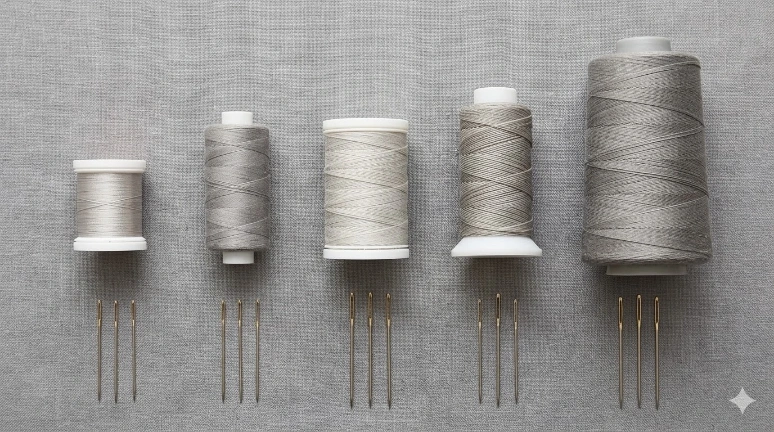
Thread care is simple but important. Stored correctly, quality thread lasts five to ten years. Stored incorrectly, it weakens and breaks mid-project.
Light keep thread away from direct sunlight. UV light degrades cotton thread fiber over time and causes color fading in all thread types. Store in a drawer, cupboard, or opaque container.
Heat avoid storing thread near heat sources. Excess heat causes synthetic threads to stretch slightly on the spool, changing tension behavior when used.
Humidity cotton thread absorbs moisture and can mildew if stored in damp conditions. Keep in a dry environment. An airtight container is ideal for long-term cotton thread storage.
Thread holders wall-mounted thread racks organize thread visually and keep spools from tangling. Keep spools capped with the thread end tucked under the cap to prevent unwinding.
Old thread test pull a length of thread from a stored spool and snap it between your hands. If it breaks with minimal force, the thread has weakened and should be replaced before starting a project.
Sewing thread is a twisted fiber strand used in a needle to form stitches in fabric. It connects the top thread from the machine spool with the bobbin thread below the needle plate to form each stitch.
Polyester all-purpose thread is the best choice for most home sewing. It works on almost every fabric type, has slight stretch to match fabric movement, is machine washable, and is available in every color. For quilting specifically, cotton quilting thread is the better choice.
Sewing thread joann fabrics customers purchased included cotton thread, polyester thread, silk thread, nylon thread, rayon embroidery thread, metallic thread, elastic thread, invisible thread, heavy duty thread, and quilting thread. Brands stocked included Gutermann, Coats and Clark, Singer, DMC, and Madeira.
Use ticket 50 to 60 thread for most standard garment sewing on medium-weight fabrics. Use ticket 30 to 40 for heavy fabrics like denim and canvas. Use ticket 60 to 80 for fine fabrics like silk and organza
Nylon heavy duty thread is the strongest standard sewing thread for stress applications like upholstery and bag making. For standard garment construction, high-quality polyester thread like Gutermann Sew-All delivers the best strength-to-fineness ratio.
Elastic thread is a rubber-core thread used for shirring a technique that gathers fabric into stretchy rows. It is wound by hand onto the bobbin with slight tension and sewn with a long stitch length. After stitching, the elastic contracts and pulls the fabric into gathered rows.
A sewing thread kit is a multi-spool pack containing 10 to 50 thread spools in assorted colors. It is the most cost-effective format for new sewers who need a full color range at once without purchasing individual spools.
Ultimate Guide to JOANN Christmas Decorations & Crafts 2026: Where to Shop After Store Closures JOANN Fabrics was America’s favorite
Denim Fabric at JOANN: Complete Sewing & Buying Guide (2026) Denim fabric is a strong cotton twill textile best known
Cotton Canvas Fabric at JOANN: Duck Canvas, Sewing Projects & Buying Guide (2026) Cotton canvas fabric was one of the