Muslin Fabric JOANN: Cotton Muslin Uses, Sewing & Buying Guide (2026)
Muslin Fabric JOANN: Cotton Muslin Uses, Sewing & Buying Guide (2026) Muslin fabric was one of the most practical cotton
 Skip to content
Wool yarn is the original knitting and crochet fiber a natural animal fiber spun from sheep fleece that has been used for textiles for thousands of years. It is warmer than acrylic, more elastic than cotton, and produces finished garments and accessories with a quality and stitch definition that no synthetic fiber can fully replicate. JOANN Fabrics stocked wool yarn and wool blend yarn across the joann yarn department in multiple weights, brands, and fiber compositions covering merino wool yarn, lambswool yarn, alpaca wool blend yarn, and superwash wool yarn as part of the complete joann fabrics crafting ecosystem.
After store closures in 2025, searches for wool yarn joann and joann wool yarn moved online. This guide covers every type, weight, brand, care instruction, project use, and where to buy wool yarn now.
Wool yarn is a natural animal fiber yarn made from the fleece of sheep. The sheep wool fiber is sheared from the sheep, cleaned to remove lanolin in wool and debris, carded to align the fibers, and then spun into yarn strands. The result is a breathable natural fiber with properties no synthetic fiber can fully replicate.
What makes wool yarn different from acrylic or cotton is the fiber crimp. Wool fiber crimp is the natural wave or curl built into each individual fiber strand. This crimp creates air pockets between fibers that trap body heat giving wool its famous wool insulation properties. The same crimp structure gives wool its natural elasticity and ability to spring back to shape after stretching.
Wool is a biodegradable yarn fiber. It breaks down naturally at the end of its life cycle, unlike synthetic acrylic yarn which is petroleum-based and does not biodegrade. This makes wool the environmentally preferred fiber for crafters who care about fiber sustainability.

Wool production starts with wool fleece the full coat sheared from a sheep once or twice per year. Raw fleece contains lanolin in wool, a natural wax that makes raw fiber water resistant and gives it a distinctive smell. Processing removes most lanolin through washing and scouring.
After washing, the fiber goes through carding a combing process that removes remaining debris and aligns the wool fiber crimp into a consistent direction. Carded fiber is drafted into a roving wool yarn preparation before being spun into finished yarn strands.
The spinning process twists fibers together into the plied yarn construction that holds the yarn together during knitting and crochet. More twist creates a harder yarn with better stitch definition. Less twist creates a softer, fluffier yarn with more wool fiber loft.
Superwash wool yarn goes through an additional chemical treatment that removes the microscopic scales on wool fiber surfaces. These scales are what cause standard wool to felt in hot water they interlock and mat together permanently. Removing them creates machine washable superwash wool that does not felt or shrink in the washing machine.
Wool yarn is the preferred fiber for garments and cold weather accessories because of its wool warmth insulation and moisture wicking fiber properties. Unlike acrylic which simply traps warm air, wool actively manages moisture absorbing up to 30 percent of its weight in moisture vapor without feeling wet against the skin. This breathable natural fiber behavior makes wool the correct choice for any project worn directly against the body.
Common uses include wool yarn for sweaters and cardigans, wool yarn for hats and beanies, wool yarn for scarves and cowls, wool yarn for socks and fine accessories, wool yarn knitting projects across all garment categories, and wool yarn crochet projects for textured accessories and home decor.
Wool yarn works for blankets but with tradeoffs. It is warmer and more luxurious than acrylic blanket yarn but requires hand washing rather than machine washing. Wool blankets are heavier and more expensive to make than acrylic alternatives. For everyday-use blankets that will be washed regularly, acrylic yarn is more practical. For heirloom-quality blankets or projects where warmth and natural fiber are priorities over convenience, wool is the superior choice. If you want machine washable wool blanket yarn specifically, superwash wool yarn is the correct option.
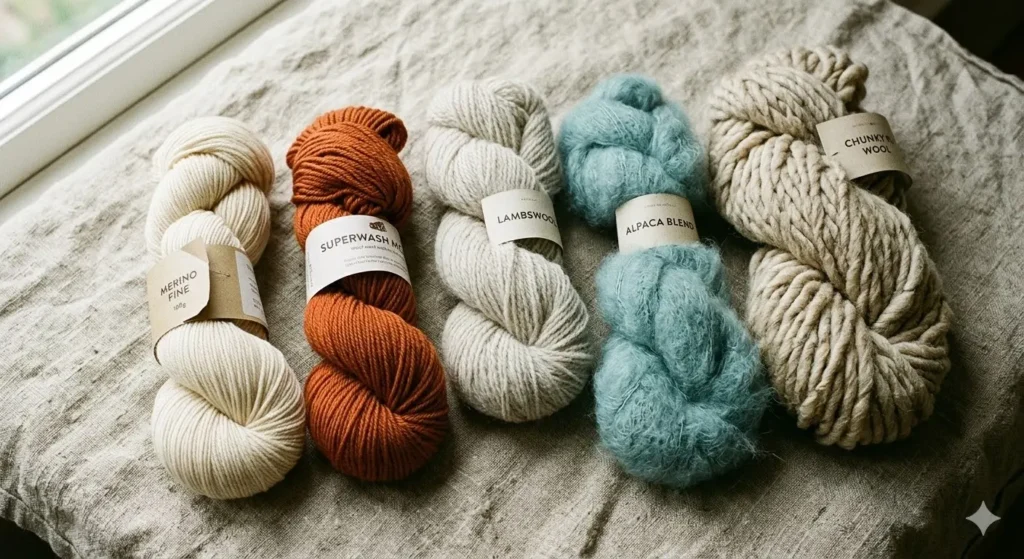
Wool yarn covers a much wider range of fiber types than most crafters realize. Each type has different properties that affect how the finished project looks, feels, and performs.
Merino wool yarn is the softest and most popular wool type for wearables. Merino sheep produce finer fibers than standard breeds fine enough to wear directly against the skin without itching. It is the go-to choice for baby items, garments, and any project where softness matters most.
Superwash wool yarn is merino or standard wool that has been chemically treated to be machine washable. It does not felt in the washing machine. This is the most practical wool for everyday wearable projects where hand washing is not realistic.
Non superwash wool is untreated natural wool that felts in hot water and agitation. It produces the most elastic and stitch-definition-rich yarn but requires hand washing and careful care. Used by experienced knitters who prioritize performance over convenience.
Lambswool yarn comes from the first shearing of a young sheep. It is softer than standard adult wool because the fiber tips have never been cut before. It has a distinctive softness and fine fiber diameter that makes it excellent for lightweight garments and accessories.
Alpaca wool blend yarn combines wool with alpaca fiber. Alpaca is softer and warmer than wool but lacks elasticity. Blending the two creates a yarn with wool’s elasticity and alpaca’s warmth and softness one of the most luxurious yarn blends available.
Wool blend yarn covers any combination of wool with other fibers. Common blends include wool acrylic blend yarn which adds affordability and machine washability to the base wool performance. Wool nylon blend yarn adds durability and wear resistance the standard choice for wool yarn for socks where stress and abrasion are constant.
Chunky wool yarn is a bulky or super bulky weight wool used for fast projects like thick scarves, chunky hats, and arm knitting blankets. It works up very quickly on large needles and hooks.
Worsted weight wool yarn is the most common wool weight for everyday garment knitting and the standard weight stocked in the joann yarn department.
Every pattern specifies a yarn weight number and your wool yarn must match it for gauge and finished size to work correctly. The weight system works the same for wool as for acrylic.
| Weight | Number | Gauge per 4 inches | Needle Size | Hook Size | Common Projects |
|---|---|---|---|---|---|
| Lace weight | 0 | 32-plus stitches | 1.5 to 2.25mm | 1.5 to 2.25mm | Fine lace shawls |
| Fingering weight | 1 | 28 to 32 stitches | 2.25 to 3.5mm | 2.25 to 3.5mm | Socks, fine garments |
| Sport weight | 2 | 23 to 26 stitches | 3.5 to 4.5mm | 3.5 to 4.5mm | Baby items, light garments |
| DK weight | 3 | 21 to 24 stitches | 4.0 to 4.5mm | 4.0 to 4.5mm | Light sweaters, accessories |
| Worsted weight | 4 | 16 to 20 stitches | 4.5 to 5.5mm | 4.5 to 5.5mm | Sweaters, hats, scarves |
| Bulky | 5 | 12 to 15 stitches | 5.5 to 8mm | 5.5 to 8mm | Chunky scarves, thick hats |
| Super bulky | 6 | 7 to 11 stitches | 8 to 15mm | 8 to 15mm | Fast blankets, arm knitting |
Worsted weight wool yarn was the most stocked weight in the joann yarn department because it covers the widest range of garment and accessory projects. Fingering weight wool was the second most common primarily for wool yarn for socks and fine lace shawls. Chunky wool yarn and super bulky yarn occupied a smaller but dedicated shelf section for fast project buyers.
Wool yarn fiber feels different from acrylic at every quality level. Standard wool can feel prickly or slightly rough this comes from the microscopic scales on wool fiber surfaces that catch on sensitive skin. Merino wool yarn eliminates this entirely because merino fiber diameter is thin enough that the scale edges cannot be felt against skin. Lambswool yarn is similarly soft due to its fine fiber diameter.
Standard wool can be scratchy yes. The scratchiness is caused by fiber diameter. Fibers thicker than about 30 microns can be felt against sensitive skin. Fibers below 20 microns which is merino territory are not detectable and feel soft. The fix is simple: choose merino wool yarn or lambswool yarn for any project worn against skin. Standard wool is appropriate for outerwear, hats worn over hair, and any project not in direct skin contact.
Wool naturally resists odor far better than acrylic or cotton. This is because wool fiber absorbs moisture vapor and traps odor-causing bacteria inside the fiber structure rather than letting it sit on the surface. This is why wool socks and wool sweaters can be worn multiple times between washing without developing odor one of the practical advantages of natural animal fiber yarn over synthetic alternatives.
| Feature | Wool Yarn | Acrylic Yarn |
|---|---|---|
| Fiber type | Natural animal fiber | Synthetic petroleum-based |
| Warmth | Very high | High |
| Breathability | Medium — moisture wicking | Low |
| Elasticity | Very high | High |
| Felting risk | High — non superwash wools | None |
| Allergy risk | Medium — lanolin sensitivity | Very low |
| Machine washable | Usually no — hand wash | Yes |
| Cost | Medium to very high | Low to medium |
| Stitch definition | Excellent | Good |
| Biodegradable | Yes | No |
| Best for | Premium garments, cold weather | Everyday projects, beginners |
Wool outperforms acrylic in warmth, breathability, stitch definition, and natural feel. Acrylic outperforms wool in convenience, affordability, and machine washability. For beginners or large volume projects where budget matters, acrylic is the practical choice. For garments, socks, and wearables where performance matters, wool is worth the additional cost and care requirements. For a full breakdown of acrylic yarn behavior and project uses see the acrylic yarn joann guide.
| Feature | Wool Yarn | Cotton Yarn |
|---|---|---|
| Warmth | Very high | Low to medium |
| Breathability | Medium | High |
| Elasticity | Very high | Very low |
| Absorbency | Moisture wicking | High absorption |
| Felting risk | Yes | No |
| Best for | Cold weather, garments | Summer wear, dishcloths |
| Beginner friendly | Medium | Medium |
Wool and cotton serve completely different project purposes. Wool is the cold weather fiber warmer, more elastic, and better at managing moisture vapor in cold conditions. Cotton is the warm weather and kitchen fiber more breathable, better for items that need absorbency, and non-felting. Neither replaces the other. For a full breakdown of cotton yarn behavior see the cotton yarn joann guide.
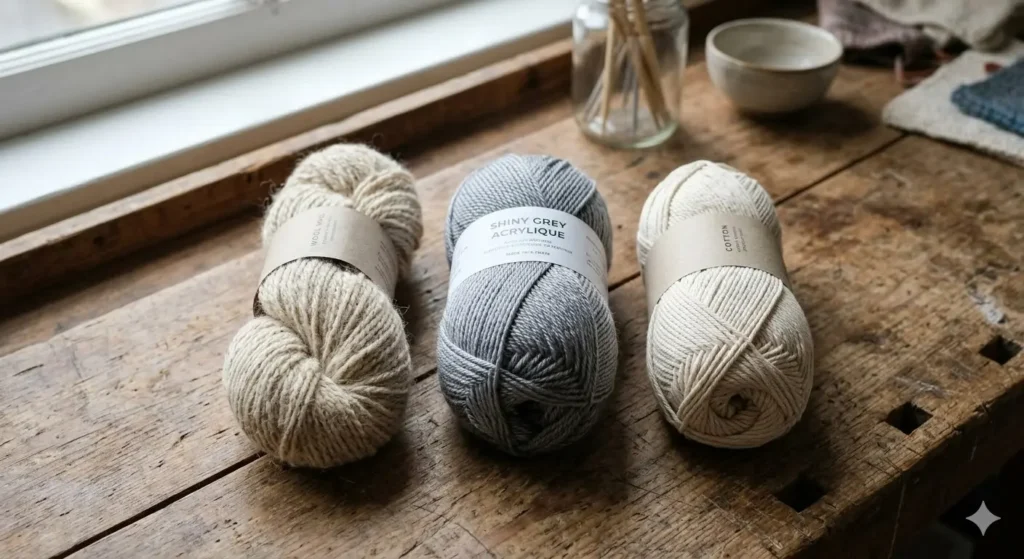
Use these four questions to choose the correct wool type before buying.
| Project | Best Wool Type | Weight | Key Property |
|---|---|---|---|
| Sweater | Merino superwash | Worsted or DK | Soft against skin, washable |
| Socks | Wool nylon blend | Fingering | Durability and elasticity |
| Baby items | Fine merino superwash | Sport or DK | Soft, machine washable |
| Hat for gifting | Superwash merino | Worsted | Washable, warm, soft |
| Scarf | Any merino or wool blend | Worsted or bulky | Warmth and drape |
| Chunky blanket | Chunky wool or wool blend | Bulky or super bulky | Fast, warm, dramatic texture |
| Heirloom project | Non superwash merino | Any weight | Best stitch definition and feel |
Wool yarn is intermediate-level, not the easiest beginner fiber. It is more forgiving than cotton because wool elasticity helps maintain tension during learning but it requires more care and costs more than acrylic, which makes mistakes more expensive.
The best approach for beginners interested in wool is to start with a superwash merino worsted weight yarn. This gives all of wool’s elasticity and stitch clarity benefits without the felting risk. The wool elasticity makes it easier to maintain even tension than cotton. The stitch definition makes it easier to see your stitches and correct mistakes than with fluffy acrylic.
Avoid non superwash wool for first projects. The felting risk means that a washing mistake destroys the project entirely an unnecessary frustration for beginners still learning technique.
Washing non superwash wool in the machine is the single most common and most irreversible wool mistake. Mechanical agitation in hot or even warm water causes wool fiber scales to interlock permanently the wool felting process creates a dense matted fabric that cannot be unfelted. Always check the label before washing.
Buying standard wool for skin-contact projects causes itching, discomfort, and projects that never get worn. Fiber diameter determines scratchiness choose merino or lambswool for anything touching skin.
Ignoring dye lots on large projects causes visible color variations across sections of the finished piece. Always buy enough skeins from the same dye lot to complete the project in one purchase.
Skipping the gauge swatch on garments causes sizing errors. Wool gauge runs differently from acrylic at the same needle size. A two-inch size error in a sweater means hours of work produce a garment that does not fit.
Using high heat to block or dry wool causes wool shrinkage. Lay flat to dry at room temperature. Never put wool in a hot dryer.
Expecting wool to feel like acrylic wool has more grip and elasticity than acrylic. It behaves differently on the needles and hooks. The learning curve is short but worth understanding before starting.
Wool yarn care is more involved than acrylic but straightforward once the rules are understood.
| Wool Type | Washing | Water Temperature | Drying | Notes |
|---|---|---|---|---|
| Non superwash merino | Hand wash only | Cool — never warm | Lay flat | Agitation causes felting |
| Superwash wool | Machine wash | Cool or warm gentle | Lay flat or tumble low | Still avoid high heat |
| Wool nylon blend | Hand wash or machine gentle | Cool | Lay flat | Check label |
| Wool acrylic blend | Machine wash | Cool or warm | Tumble low | Blend determines care |
| Lambswool | Hand wash only | Cool | Lay flat | Very sensitive to heat |
| Alpaca wool blend | Hand wash gentle | Cool | Lay flat | Alpaca loses shape in machine |
The most important rule for hand wash wool yarn is to avoid agitation. Submerge the item in cool water with a small amount of wool wash. Gently press water through the fabric without rubbing or wringing. Lift out, support the full weight of the wet item, and roll in a towel to remove excess water before laying flat to dry.
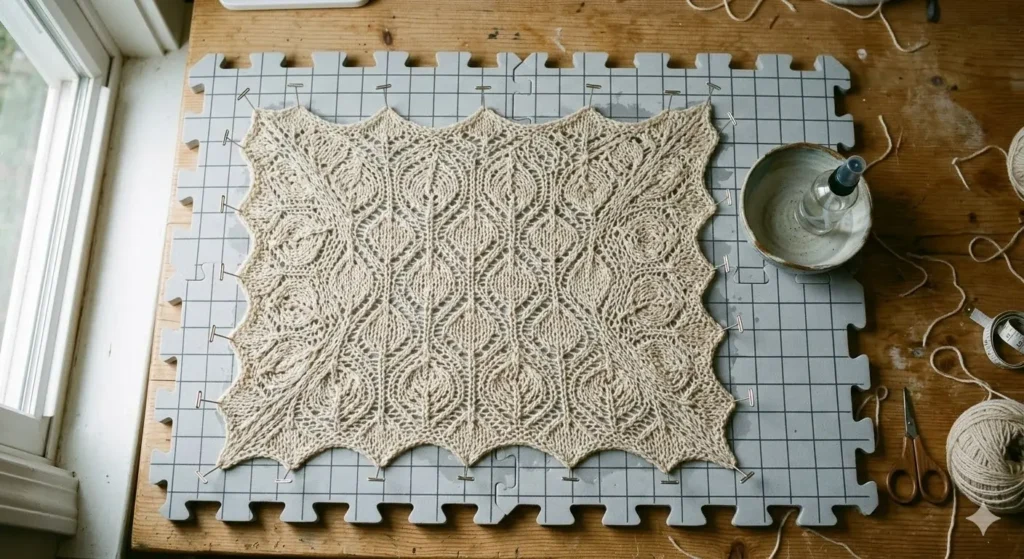
Wool yarn blocking is the process of wetting the finished item and reshaping it to final dimensions while damp. Wool fiber responds to wet blocking by fully relaxing its natural crimp structure allowing stitches to open, even out, and settle into their correct final positions. Blocking transforms the appearance of wool projects more dramatically than any other finishing technique. Pins and blocking boards hold the item to final measurements while drying.
Wool felting is what happens when non superwash wool is exposed to heat, moisture, and mechanical agitation simultaneously. The microscopic scales on wool fiber surfaces interlock and permanently bond together creating a dense matted fabric rather than knitted stitches. The wool felting process is irreversible.
Felting can be intentional. Felted projects are thick, dense, and durable popular for bags, slippers, and decorative home items. To intentionally felt, use non superwash wool yarn and machine wash on a hot setting with agitation. The finished felted piece shrinks significantly typically to 30 to 50 percent of original dimensions.
Accidental felting happens when non superwash wool is washed incorrectly. The felted result cannot be unfelted. The only option is to use the material as felted fabric for a different project or discard it.
JOANN stocked a focused selection of wool and wool blend yarn brands in the joann yarn department. Wool brands took less shelf space than acrylic but were consistently stocked year-round.
Lion Brand stocked several wool and wool blend options in the joann yarn department. Lion Brand Fishermen’s Wool was the most widely available 100% wool at an accessible price point a worsted weight natural wool available in natural undyed and a small range of colors. It is a non superwash wool appropriate for outerwear and felting projects.
Lion Brand Wool Ease yarn was one of the most widely available wool blend yarns at JOANN and one of the most searched by name. Wool Ease combines acrylic and wool fibers in a worsted weight blend, creating a machine washable yarn that delivers some of wool’s warmth and stitch definition but with the easy care of acrylic. It is the most practical entry point for crafters who want wool performance without hand washing requirements. Wool Ease yarn joanns customers searched for specifically because it bridges the gap between budget acrylic and full wool warm enough to outperform standard acrylic, easy enough to machine wash on a gentle cycle. It is available in a wide color range and remains in production through Amazon and major craft retailers.
Patons Classic Wool was one of the most popular wool yarns stocked at JOANN a worsted weight 100% pure new wool in a wide color range at a mid-tier price point. It is a non superwash wool that produces excellent stitch definition and is one of the most recommended wools for traditional colorwork and Fair Isle patterns. Patons also offered the Patons Classic Wool Worsted Superwash version for machine washable applications.
Bernat stocked wool blend options in the joann yarn department alongside their dominant acrylic lines. Bernat Roving is a super bulky 80% acrylic 20% wool blend that delivers some of wool’s warmth and texture at near-acrylic pricing one of the most accessible wool blend options for beginner crafters wanting to try natural fiber without full wool cost.
Roving wool yarn is loosely spun wool fiber sometimes called unspun wool used for arm knitting, large loop blankets, and super bulky projects. It is minimally processed wool in thick un-plied rope-like strands that have been carded but not tightly twisted. This makes wool roving dramatically different in texture from standard plied yarn it is softer, thicker, and works up into chunky textures very quickly on large needles or by hand. JOANN stocked roving wool yarn in natural and dyed colorways alongside the super bulky yarn section. It produces dramatic chunky texture in large projects and is one of the most visually striking wool yarn options for home decor and fast project buyers.
Wool yarn suits projects where performance matters more than price or convenience. Many crafters use wool yarn crochet patterns for winter accessories and textured garments the natural stitch definition of wool shows intricate stitch work far more clearly than acrylic alternatives.
Wool behaves differently from acrylic on needles and hooks. Understanding the differences prevents the most common wool yarn frustrations.
Wool has more natural grip than acrylic. Stitches do not slide as easily off needles which is an advantage for beginners learning to maintain consistent stitch counts but can feel sticky to experienced acrylic crafters switching to wool. Bamboo and wooden needles grip wool well. Metal needles can be used but may feel like wool is dragging slightly on smooth metal surfaces.
Wool elasticity returns stitches to a consistent size after each stitch is formed this self-correcting behavior makes gauge more consistent across rows than cotton or acrylic provides. This is why wool is the standard fiber for fitted garments where consistent gauge matters most.
For crochet, wool’s grip slows hook movement slightly compared to acrylic. Tension adjustments may be needed wool crochet projects often need a hook one size larger than the pattern calls for to match gauge. Always make a gauge swatch with the actual wool you are using before starting any fitted crochet garment.
| Type | Brand Example | Weight | Price Range | Notes |
|---|---|---|---|---|
| Wool blend | Bernat Roving | Super bulky | $8 to $12 per skein | 80% acrylic 20% wool |
| Standard wool | Patons Classic | Worsted | $9 to $14 per skein | 100% pure new wool |
| 100% natural wool | Lion Brand Fishermen's | Worsted | $10 to $15 per skein | Non superwash |
| Merino superwash | Various | Worsted or DK | $14 to $22 per skein | Premium soft wearable wool |
| Alpaca blend | Various | DK or worsted | $15 to $25 per skein | Luxury warmth and softness |
JOANN weekly coupon discounts of 40 to 50 percent off applied to wool yarn during sale periods bringing standard wool brands under $8 per skein. The joann clearance yarn bins occasionally offered discontinued wool colorways at 50 to 70 percent off regular pricing. Wool yarn was never as aggressively discounted as Big Twist acrylic because house brand wool options were limited national brands like Patons and Lion Brand held their price floors more consistently. JOANN yarn sale events in fall and winter drove the highest wool purchase periods because cold weather project season aligns directly with wool’s strongest use cases.
Wool yarn was a dedicated category in the joann yarn department because it served a specific and loyal customer segment experienced knitters and fiber enthusiasts who would not substitute wool with acrylic for their projects. These customers visited JOANN specifically for wool and drove higher per-transaction values than acrylic buyers because wool costs more per skein and projects often require multiple skeins.
The joann yarn aisle positioned wool and wool blend yarn in a dedicated section adjacent to premium yarns rather than mixing it with the acrylic budget section. This organization made it easy for wool buyers to find natural fiber options quickly without searching through rows of acrylic. Seasonal wool displays featured prominently in fall and winter yarn promotions when cold weather project demand peaks and wool’s warmth advantages are most relevant to buyers.
JOANN also stocked wool-adjacent tools in the same section wooden knitting needles, blocking mats, wool wash, and stitch markers positioned alongside wool yarn to support the complete wool project experience as part of the broader joann fabrics craft ecosystem.
| Feature | JOANN Historical | Michaels | Hobby Lobby |
|---|---|---|---|
| Merino wool options | Limited | Limited | Limited |
| Standard wool | Patons, Lion Brand | Lion Brand | Yarn Bee wool blends |
| Wool blend range | Moderate | Moderate | Moderate |
| Superwash options | Limited | Limited | Limited |
| Alpaca blends | Occasional | Occasional | Occasional |
| Roving wool | Yes | Occasional | Yes |
| Coupon discount | 40 to 50% weekly | 20% app | 40% weekly |
| Post-closure access | Amazon | In-store | In-store |
Wool yarn selection was a relative weakness across all major craft chains including JOANN compared to dedicated yarn stores. All three chains primarily stocked wool blend options rather than premium 100% merino or specialty wool. For serious wool crafters, dedicated yarn shops and online retailers like Knit Picks and WEBS offer far wider wool selections than any general craft chain provided. For casual wool buyers, current Amazon selection exceeds what JOANN, Michaels, or Hobby Lobby stocked in-store.
JOANN stocked wool yarn as a permanent but secondary category in the joann yarn aisle from its earliest yarn department expansion through to store closures in 2025. The wool section occupied less shelf space than acrylic but was maintained year-round because of the loyalty of the knitting customer segment who specifically sought natural fiber yarn. JOANN wool yarn joann searches captured a customer who already knew what they wanted and came specifically for it a high-intent buyer who typically combined wool purchases with knitting needles, patterns, and accessories in the same transaction.
JOANN positioned wool as the premium yarn category higher price points, wool fiber properties prominently labeled on packaging, and placement near circular knitting needles and wooden dpn sets that wool knitters required. The joann yarn department treated wool as a craft tool for skilled crafters rather than a beginner entry product which reflected both the higher cost and the care knowledge required to use wool successfully.
Amazon carries the widest mainstream wool yarn selection including Lion Brand, Patons, and Bernat wool options with free shipping on qualifying orders. Michaels and Hobby Lobby carry basic wool blend options in-store. For premium merino wool yarn and specialty superwash options, online retailers Knit Picks and WEBS offer significantly wider selections than any general craft chain.
Many customers who previously used joann fabrics near me to check wool yarn stock now buy through Amazon or specialty wool retailers online for the widest natural fiber selection. For the complete overview of all yarn types previously available see the full joann yarn category guide.

Finished wool projects need more careful care than acrylic but properly maintained wool items last decades.
Store unused wool yarn in sealed bags or bins wool fiber is attractive to moths and other insects that feed on natural animal fiber. Cedar blocks, cedar rings on yarn skeins, or lavender sachets placed inside storage repel moths without chemicals. Check stored wool seasonally for any signs of damage.
Store finished wool garments folded rather than hung. Hanging stretches the shoulders and distorts the garment shape over time because wool is heavy enough when wet or in gravity to elongate permanently at the hanger point.
Clean before storing. Moths are attracted to soil, body oils, and food residue on wool fibers. Clean garments before long-term storage to remove attractants.
For blocked items, allow full drying before stacking or folding. Wool stored while still slightly damp can develop mildew odor in sealed storage.
A natural animal fiber yarn made from sheep fleece. It is warmer than acrylic, more elastic than cotton, and produces garments with stitch definition and performance that no synthetic yarn fully replicates.
Standard wool can be scratchy against sensitive skin. Merino wool yarn and lambswool yarn are not scratchy because their fiber diameter is fine enough that the fiber tips cannot be felt against skin. Choose merino for any project worn directly against skin.
Superwash wool yarn is machine washable. Non superwash wool must be hand washed in cool water without agitation machine washing causes irreversible felting. Always check the label before washing any wool item.
Wool that has been chemically treated to remove the microscopic scales that cause felting. This makes it safe to machine wash on a cool gentle cycle. It is the most practical wool for everyday wearable projects.
All merino is wool but not all wool is merino. Merino wool comes specifically from Merino sheep and produces finer fiber that is soft enough for direct skin contact. Standard wool from other breeds can be rougher and scratchier.
Sweaters, socks, hats, scarves, colorwork garments, lace shawls, and any project where warmth, elasticity, and stitch definition matter. It outperforms acrylic for wearable garments and cold weather accessories.
Non superwash wool shrinks dramatically if machine washed or washed in warm water with agitation this is the wool felting process. Superwash wool does not shrink under normal machine wash and low heat conditions
Non superwash wool: hand wash in cool water, no agitation, gentle press, roll in towel, lay flat to dry. Superwash wool: machine wash on cool gentle cycle, lay flat or tumble dry low heat.
Wetting the finished item and pinning it to final dimensions while damp. Wool fiber relaxes when wet and holds its blocked shape permanently after drying. Blocking dramatically improves the appearance and stitch definition of finished wool projects.
Patons Classic Wool, Lion Brand Fishermen’s Wool, Bernat Roving wool blend, and seasonal specialty wool blend options in the joann yarn department.
Wool comes from sheep and has natural elasticity and crimp. Alpaca comes from alpaca animals and is warmer and softer than wool but has no elasticity. Alpaca wool blend yarn combines both elasticity from wool and extra warmth and softness from alpaca.
Muslin Fabric JOANN: Cotton Muslin Uses, Sewing & Buying Guide (2026) Muslin fabric was one of the most practical cotton

Blanket Yarn at JOANN: Types, Brands, Projects and Buying Guide (2026) Blanket yarn is the fastest way to finish a
Big Twist Yarn: Complete Guide to Joann’s Exclusive Value & Premium Lines Finding affordable yarn that doesn’t sacrifice quality feels