
Poplin Fabric at JOANN: Complete Types, Uses & Buying Guide (2026)
Poplin Fabric at JOANN: Complete Types, Uses & Buying Guide (2026) Poplin is a tightly woven cotton fabric with a
 Skip to content
Yarn weight decides how thick your yarn is and how your project will turn out. If you’ve ever been confused by terms like worsted, bulky, or DK this is common for beginners. We have tried to makes yarn weights so simple you can choose the right one without guessing.
You’ll learn the full yarn weight chart, what each size is used for, and how to match it with hooks and needles. If you’re browsing yarn at JOANN or comparing different options,we have covered those as well for you to see how each type fits into these weight systems.
This is the Craft Yarn Council standard yarn weight system used across the US, UK, and most published patterns worldwide. Every yarn label, knitting pattern, and crochet pattern references this system.
| Weight Number | Category Name | Common Names | Knit Gauge (4 in) | Crochet Gauge (4 in) | Knitting Needle | Crochet Hook |
|---|---|---|---|---|---|---|
| 0 | Lace | Thread, cobweb | 33–40 sts | 32–42 sts | 1.5–2.25mm | Steel 1.6–1.4mm |
| 1 | Super Fine | Fingering, sock, baby | 27–32 sts | 21–32 sts | 2.25–3.25mm | B-1 to E-4 |
| 2 | Fine | Sport, baby | 23–26 sts | 16–20 sts | 3.25–3.75mm | E-4 to 7 |
| 3 | Light | DK, light worsted | 21–24 sts | 12–17 sts | 3.75–4.5mm | 7 to I-9 |
| 4 | Medium | Worsted, afghan, aran | 16–20 sts | 11–14 sts | 4.5–5.5mm | I-9 to K-10½ |
| 5 | Bulky | Chunky, craft, rug | 12–15 sts | 8–11 sts | 5.5–8mm | K-10½ to M-13 |
| 6 | Super Bulky | Super chunky, roving | 7–11 sts | 7–9 sts | 8–12.75mm | M-13 to Q |
| 7 | Jumbo | Jumbo, arm knit roving | 6 or fewer | 6 or fewer | 12.75mm+ | Q and larger |
How to read this chart: Find your yarn’s weight number on the label it appears inside a skein symbol. Match that number to this table to find the correct needle, hook, and gauge for your project.
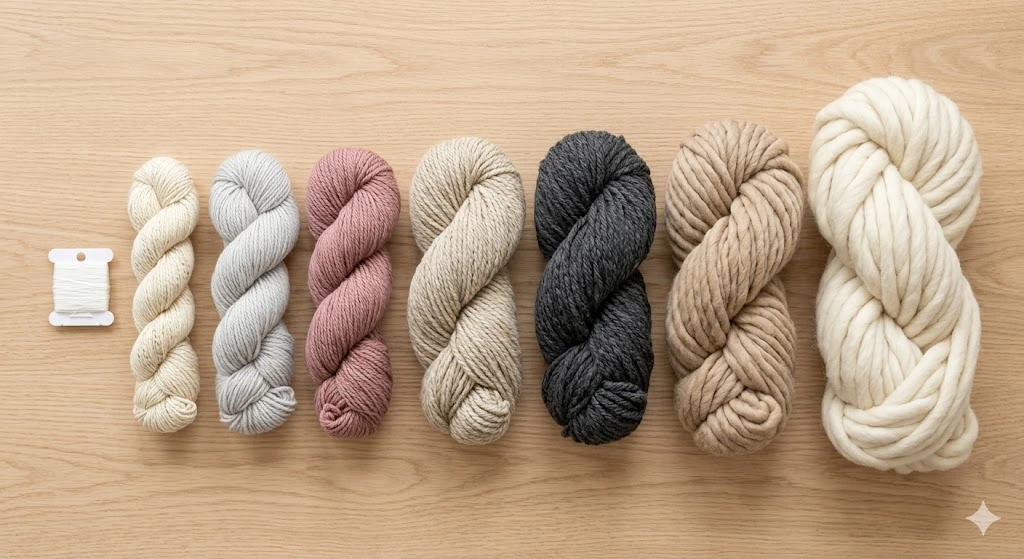
Yarn weight is the thickness of a strand of yarn. It has nothing to do with how heavy the skein is in grams or ounces it refers entirely to the diameter of the individual yarn strand.
The Craft Yarn Council created a standardized numbering system from 0 to 7 to classify yarn thickness. The number appears on every yarn label inside a small skein symbol. Lower numbers are thinner. Higher numbers are thicker.
This system exists because yarn thickness directly controls three things in a finished project: gauge (how many stitches fit in 4 inches), the correct needle or hook size to use, and how fast the project works up.
Lace weight is the finest yarn category. It is used for shawls, wraps, and delicate openwork patterns where an airy, lightweight fabric is the goal. Lace weight is also where crochet thread lives the fine cotton thread used for doilies and edging. For fine thread crochet work see the crochet thread guide.
Hook: Steel 1.4–1.6mm | Needle: 1.5–2.25mm
Super fine yarn is most commonly called fingering weight or sock weight. It is slightly thicker than lace and used for socks, shawls, and fine baby garments. The higher stitch count per inch produces detailed colorwork and stitch texture.
Hook: B-1 to E-4 (2.25–3.5mm) | Needle: 2.25–3.25mm
Fine weight yarn, also called sport weight or baby weight, is slightly heavier than fingering. It is used for light sweaters, baby items, and accessories where a finer fabric than worsted is needed but more speed than fingering.
Hook: E-4 to 7 (3.5–4.5mm) | Needle: 3.25–3.75mm
DK stands for double knit. It is the most popular yarn weight in the UK and produces a drapey, lightweight fabric that works up faster than fingering. Used widely for children’s garments, sweaters, and lightweight accessories. See the baby yarn guide for DK baby project options.
Hook: 7 to I-9 (4.5–5.5mm) | Needle: 3.75–4.5mm
Worsted weight is the most used yarn weight in both knitting and crochet. It works for almost any project blankets, sweaters, hats, scarves, and home décor. Most beginner patterns use worsted because it is forgiving, fast, and widely available. For full detail on worsted yarn and its differences from aran see the worsted yarn guide.
Hook: I-9 to K-10½ (5.5–6.5mm) | Needle: 4.5–5.5mm
Bulky yarn is approximately twice as thick as worsted. It works up much faster and is used for chunky blankets, rugs, heavy sweaters, and fast accessories. Also called chunky or craft yarn. For complete coverage of bulky yarn types, brands, and projects see the bulky yarn guide.
Hook: K-10½ to M-13 (6.5–9mm) | Needle: 5.5–8mm
Super bulky is very thick and works up extremely quickly. Most chenille blanket yarns like Bernat Blanket sit at weight 6. Used for fast throw blankets, chunky cowls, and oversized scarves. See the full blanket yarn guide for super bulky blanket options.
Hook: M-13 to Q (9–15mm) | Needle: 8–12.75mm
Jumbo is the thickest standard yarn weight. It is used for arm knitting, finger knitting, and very large-stitch projects. Blankets in jumbo weight complete in under an hour using arms instead of needles.
Hook: Q and larger (15mm+) | Needle: 12.75mm and larger
Ply and weight are two different systems that describe yarn and confusing them is one of the most common mistakes beginners make.
Ply refers to the number of strands twisted together to make the yarn. A 2-ply yarn has two strands. A 4-ply has four strands. A 12-ply has twelve strands. More plies generally means a thicker yarn, but the size of each ply also matters so ply count alone does not determine weight category.
Weight refers to the finished thickness of the yarn strand. It is the standardized 0–7 system used on yarn labels in the US.
The confusion comes from the UK, Australia, and New Zealand where ply numbers are used as weight names. In those regions:
| UK/AU/NZ Ply Name | US Weight Equivalent | US Weight Number |
|---|---|---|
| 2 ply | Lace | 0 |
| 3 ply | Lace/Light Fingering | 0 |
| 4 ply | Fingering / Sock | 1 |
| 5 ply | Sport | 2 |
| 8 ply | DK (Light) | 3 |
| 10 ply | Worsted / Aran | 4 |
| 12 ply | Bulky | 5 |
| 14–16 ply | Super Bulky | 6 |
If a UK pattern calls for “4 ply yarn” you need a fingering weight yarn (US weight 1). If it calls for “8 ply” you need DK (US weight 3). Always check whether a pattern uses US or UK terminology before buying yarn.
Weight and thickness refer to the same property how thick the strand is. But different brands describe the same weight using different words, which creates confusion.
This table shows the most common names used for each weight across different brands and regions:
| Weight Number | Official Name | Also Called |
|---|---|---|
| 0 | Lace | Thread, cobweb, crochet thread |
| 1 | Super Fine | Fingering, sock, baby, 4-ply |
| 2 | Fine | Sport, baby, 5-ply |
| 3 | Light | DK, double knit, light worsted, 8-ply |
| 4 | Medium | Worsted, aran, afghan, 10-ply |
| 5 | Bulky | Chunky, craft, rug, 12-ply |
| 6 | Super Bulky | Super chunky, roving, 14-ply |
| 7 | Jumbo | Jumbo roving, arm knit yarn |
The most commonly confused pair is DK and worsted. DK (weight 3) is lighter than worsted (weight 4). Using worsted on a DK pattern produces a larger, denser fabric than intended. Always match the weight number exactly to the pattern specification.
Yarn weight and gauge are related but not the same thing.
Yarn weight is the thickness of the yarn strand a fixed property of the yarn itself.
Gauge is how many stitches fit in 4 inches of fabric a result of the combination of yarn weight, needle/hook size, and your personal tension.
Two people working with the same weight 4 worsted yarn can produce different gauges if one knits tightly and the other knits loosely. This is why patterns specify gauge and not just yarn weight.
Gauge chart by weight:
| Weight | Knit Gauge (4 in, stockinette) | Crochet Gauge (4 in, single crochet) |
|---|---|---|
| 0 Lace | 33–40 sts | 32–42 sts |
| 1 Super Fine | 27–32 sts | 21–32 sts |
| 2 Fine | 23–26 sts | 16–20 sts |
| 3 Light/DK | 21–24 sts | 12–17 sts |
| 4 Medium/Worsted | 16–20 sts | 11–14 sts |
| 5 Bulky | 12–15 sts | 8–11 sts |
| 6 Super Bulky | 7–11 sts | 7–9 sts |
| 7 Jumbo | 6 or fewer | 6 or fewer |
Why gauge matters: If a pattern says “16 stitches = 4 inches in worsted” and your swatch gives 18 stitches, your finished item will be smaller than intended. Change needle or hook size not yarn weight to match gauge.
Wraps per inch is a method for identifying yarn weight when the label is missing or unreadable. Wrap the yarn firmly around a ruler for one inch without overlapping or pulling tight. Count the wraps.
| WPI | Approximate Weight |
|---|---|
| 30+ | Lace (0) |
| 14–16 | Fingering (1) |
| 12 | Sport (2) |
| 11 | DK (3) |
| 9 | Worsted (4) |
| 7 | Bulky (5) |
| 5–6 | Super Bulky (6) |
| 0–4 | Jumbo (7) |
WPI is a guide, not an exact measurement personal wrapping tension affects the count. Always make a gauge swatch to confirm weight before starting a project with unlabeled yarn.
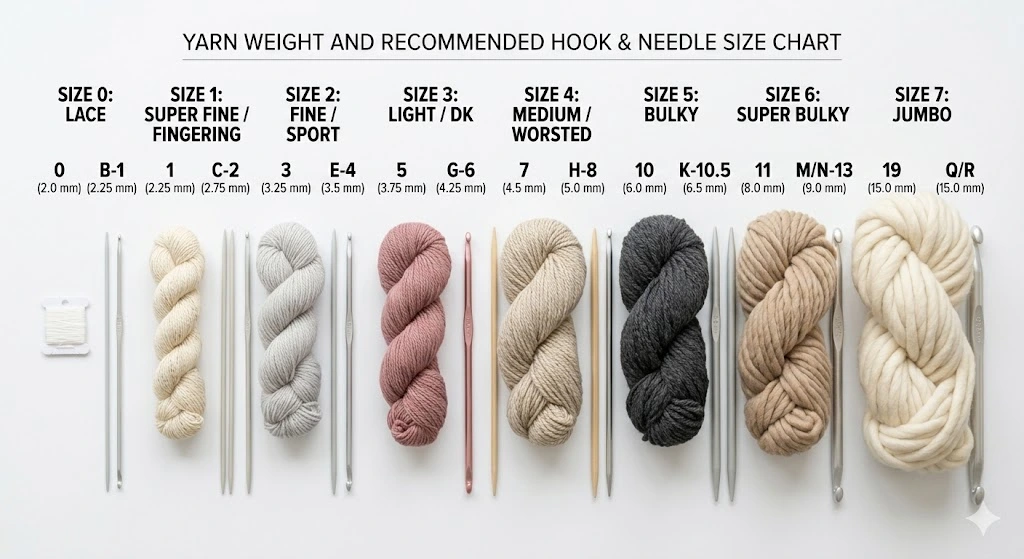
Yarn weight works the same way in crochet and knitting the 0 to 7 system applies to both. The difference is in the tool size and gauge produced.
For crochet: The hook is larger than the equivalent knitting needle for the same yarn weight. Crochet uses more yarn per square inch than knitting because crochet stitches are taller. A worsted weight blanket in crochet will use approximately 30 to 40 percent more yarn than the same size blanket knitted in worsted.
For knitting: Needles for the same weight yarn are slightly smaller than the matching crochet hook. Knitted fabric typically has more drape and stretch than crocheted fabric in the same yarn weight.
Most beginner-friendly weight for crochet: Weight 4 worsted or weight 5 bulky. Large stitches are easy to count and see. Mistakes are easy to spot and fix.
Most beginner-friendly weight for knitting: Weight 4 worsted. The standard hook range (US 7 to 9) produces manageable stitch size without being too small to handle.
For sewing thread used with sewing machines this is an entirely separate weight system unrelated to yarn weights.
If you are starting crochet or knitting for the first time use weight 4 worsted.
Here is why weight 4 worsted is the best beginner yarn weight:
Weight 5 bulky is the second best choice for beginners who want even faster results. Blankets and scarves in bulky weight complete in hours rather than days. See the bulky yarn guide for bulky beginner projects.
Weight 3 DK is the next step up in skill after worsted smaller stitches, more precision required, but still manageable for most beginners.
Avoid lace and fingering weight as your first project. The fine thread is difficult to see, easy to split, and much harder to fix when mistakes happen.
This is the section most guides skip entirely. Here is the direct answer: what weight should you actually use for each project?
| Project | Best Weight | Why |
|---|---|---|
| Thick throw blanket | Super bulky (6) | Fast, cozy, works up quickly |
| Everyday lap blanket | Bulky (5) or Worsted (4) | Balance of speed and drape |
| Baby blanket | DK (3) or Light Worsted (4) | Light, breathable |
| Winter scarf | Worsted (4) or Bulky (5) | Warm and beginner-friendly |
| Beanie hat | Worsted (4) or Bulky (5) | Standard pattern weight |
| Baby clothing | DK (3) or Sport (2) | Lightweight fabric |
| Socks | Fingering (1) | Durability and detail |
| Delicate shawl | Lace (0) or Fingering (1) | Airy fabric |
| Summer top | DK (3) or Sport (2) | Breathable |
| Dishcloth | Worsted (4) cotton | Durable and absorbent |
| Arm knit blanket | Jumbo (7) | Ultra-fast, no tools needed |
| Amigurumi toy | Worsted (4) | Tight structure holds shape |
| Rug | Bulky (5) | Covers area quickly |
For blanket-specific yarn options across bulky and super bulky weights see the blanket yarn guide.
Different fiber types behave differently within the same weight category. Here is how fiber affects your choice alongside weight.
Acrylic yarn is the most affordable and available across all weight categories. Best for beginners and large projects. Machine washable. See the acrylic yarn guide for acrylic options by weight.
Cotton yarn works best in weight 3 DK to weight 4 worsted. It does not stretch like acrylic, which makes it ideal for dishcloths, bags, and summer garments. See the cotton yarn guide for cotton weight options.
Wool yarn is available across weight 1 fingering to weight 5 bulky. It has natural elasticity that makes gauge easier to maintain. See the wool yarn guide for wool weight options.
Baby yarn concentrates in DK (weight 3) for clothing and super bulky chenille (weight 6) for fast baby blankets. See the baby yarn guide for baby-safe weight recommendations.
Blanket yarn as a category spans weight 5 to weight 7 the fast, thick end of the spectrum. See the blanket yarn guide for the full breakdown.
Patterns from the US, UK, and Australia use different naming systems for the same yarn thickness. This causes problems when following patterns from a different country.
| US Weight Number | US Name | UK/AU Name | NZ Name |
|---|---|---|---|
| 0 | Lace | 2-ply / cobweb | 2-ply |
| 1 | Super Fine / Fingering | 3-ply / 4-ply | 4-ply |
| 2 | Fine / Sport | 5-ply | 5-ply |
| 3 | Light / DK | 8-ply (DK) | 8-ply |
| 4 | Medium / Worsted | 10-ply (aran) | 10-ply |
| 5 | Bulky | 12-ply | 12-ply |
| 6 | Super Bulky | 14–16 ply | 16-ply |
| 7 | Jumbo | Jumbo / roving | Jumbo |
Key conversions to memorize:
If a yarn has no label, use the wraps per inch (WPI) method or create a gauge swatch.
WPI method: Wrap the yarn snugly around a ruler for one inch without overlapping or pulling tight. Count the wraps and compare to the WPI table in the Wraps Per Inch section above.
Gauge swatch method: Cast on or chain 20 stitches using a mid-range needle or hook. Work in stockinette or single crochet for 4 inches. Measure how many stitches fit in 4 inches and compare to the gauge chart above. This identifies the weight category more accurately than WPI alone because it accounts for your personal tension.
Follow this three-step process every time you start a new project.
Step 1 Check the pattern weight. Every well-written pattern specifies the required weight. Match your yarn label number to the pattern number exactly before buying.
Step 2 Make a gauge swatch. Even if the weight matches, your personal tension may differ from the pattern’s gauge. A 4-inch test swatch before starting the full project takes 15 minutes and prevents finishing a project that is the wrong size.
Step 3 Consider the fiber. Within the same weight category, different fibers produce different results. Cotton has no stretch. Acrylic has memory. Wool blocks beautifully. Choose the fiber after the weight, not before.
If you are substituting yarn: Always substitute within the same weight category. Never substitute across weight numbers a weight 3 yarn cannot replace a weight 5 in the same pattern without adjusting needle size, gauge, and stitch count throughout.
Buying the wrong weight is the most expensive yarn mistake. A project that calls for worsted (weight 4) worked in bulky (weight 5) produces a finished item that is larger, looser, and structurally different from what the pattern intended. Check the weight number before buying not just the color.
Confusing UK and US weight names is particularly common with online patterns. A UK pattern calling for “4 ply” does not need weight 4 yarn it needs fingering weight (weight 1). Always confirm whether a pattern uses US or UK naming conventions.
Ignoring gauge and relying only on weight produces sized items that do not fit. Gauge varies by person, fiber, and needle brand. Always swatch.
Choosing yarn by softness rather than weight for a first project almost always produces the wrong result. The most beautiful yarn in the shop is often lace weight which is the most difficult weight to learn on. Choose weight first, then color and fiber.
Substituting a different ply count without checking the weight number particularly with UK patterns causes consistent sizing errors throughout a project.
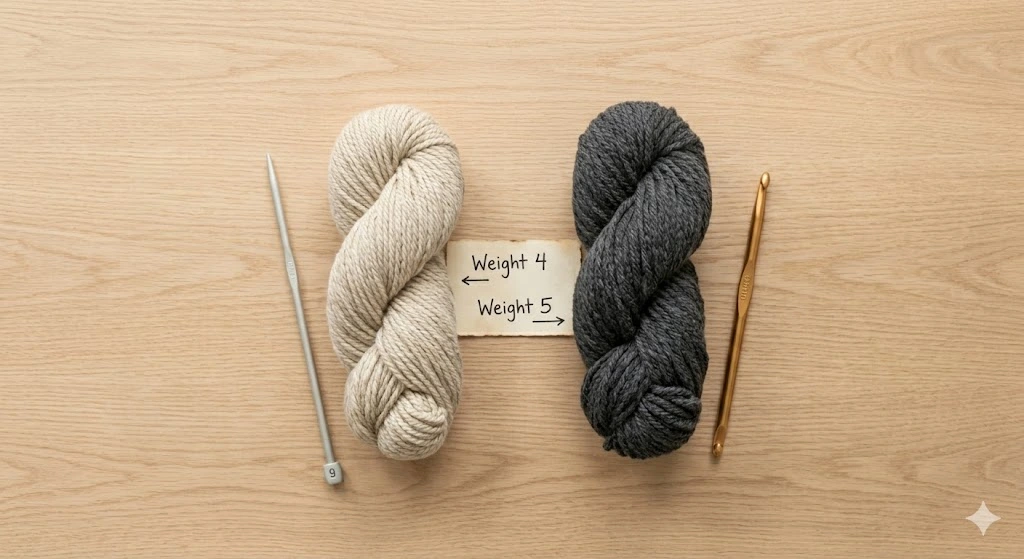
Start with weight 4 worsted for your first project. It is the most forgiving weight, the most widely available, and used in the highest number of beginner patterns. Buy worsted before exploring other weights.
Read the yarn label before buying. Every yarn label carries the weight number inside a skein symbol. Match this number to your pattern’s weight requirement before anything else.
Use the gauge table in this guide as a starting point not a final answer. Your gauge is personal. The table shows the standard range for each weight but your actual gauge with that yarn will only be confirmed by making a swatch.
When a pattern says “any worsted weight yarn” you have significant flexibility. Worsted covers a range of gauges. The swatch tells you whether your specific yarn fits the pattern’s gauge requirement.
Do not mix weight categories in one project unless the pattern specifically calls for it. Using two different yarn weights in one blanket creates visible thickness inconsistency in the finished fabric.
Yarn weight is the thickness of a yarn strand. The Craft Yarn Council standardized it into a system from 0 (lace thinnest) to 7 (jumbo thickest). The weight number appears on every yarn label inside a skein symbol.
Weight 4 worsted. It is used in the majority of beginner and intermediate knitting and crochet patterns and is the most widely available weight across all yarn brands.
DK is weight 3 (lighter). Worsted is weight 4 (heavier). DK produces a lighter, more drapey fabric. Worsted produces a thicker, more structured fabric. They cannot be substituted for each other without adjusting gauge
Weight 4 is the medium category also called worsted, afghan, or aran depending on the brand or region. It is the most common yarn weight for beginner patterns.
Weight 4 worsted is the best starting weight for both knitting and crochet. Weight 5 bulky is a close second for beginners who want faster project completion.
In US terms, 4-ply is equivalent to fingering or super fine yarn weight 1. It is NOT weight 4. UK ply numbers do not correspond to US weight numbers
Yarn weight is a fixed property of the yarn. Gauge is the number of stitches per 4 inches you personally achieve with that yarn and a specific needle or hook size. Two people using the same yarn can have different gauges.
Weight 1 fingering or sock weight. Sock yarn is spun with nylon or a nylon blend for durability and sits at the fingering weight thickness.
Poplin Fabric at JOANN: Complete Types, Uses & Buying Guide (2026) Poplin is a tightly woven cotton fabric with a

Crochet Thread at JOANN: Sizes, Types, Uses and Buying Guide (2026) Crochet thread is not yarn. It is thinner, tighter,
Glow in the Dark Yarn: The Complete Joann’s Style Guide for Crochet, Knitting & Luminous Projects Glow-in-the-dark yarn transforms ordinary